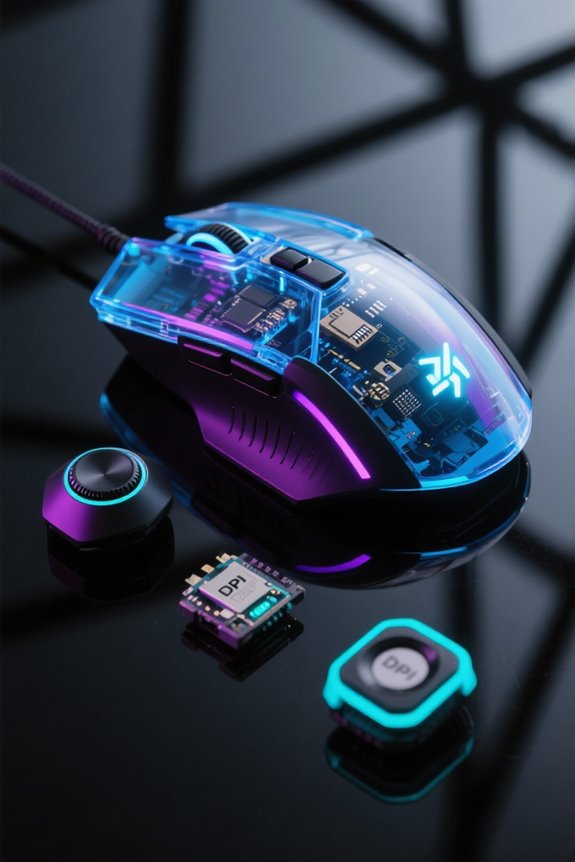


In the debate of wired versus wireless gaming mice, latency is essential. Wired models typically have 1-2ms response times. Conversely, premium wireless options, such as the Logitech G PRO X SUPERLIGHT, boast latencies around 1ms. Both types can meet competitive gaming standards of sub-20ms. Wireless mice offer added mobility but can add some latency. Budget, comfort, and performance must influence your choice. Experimenting with various options may provide insights into the best fit for your gaming style.
Key Takeaways
- Wired gaming mice typically achieve latency levels of 1-2ms, providing fast and reliable response times for competitive gaming.
- High-quality wireless mice can match wired performance with latencies as low as 1ms, closing the gap significantly.
- Total latency for wired connections averages under 5ms, while wireless models may add 2-5ms depending on distance and interference.
- Budget and gaming preferences influence the choice; wired models are generally more affordable and require no battery maintenance.
- Future technologies promise further improvements, with wireless mice approaching sub-1ms response times and better battery life exceeding 280 hours of play.
Understanding Latency in Gaming Mice
Understanding the intricacies of latency in gaming mice is essential for gamers seeking competitive advantages. Latency, the delay between your input and the resulting action on screen, ideally should be sub-20ms for peak performance in competitive gaming. Wired gaming mice typically offer an impressive input lag of just 1-2ms, while wireless mice may experience an additional 2-5ms due to signal transmission. However, recent advancements in wireless technology have produced models with 1ms latency and high polling rates, narrowing the performance gap. Overall latency is affected not just by the mouse, but by the entire gaming setup, including display and network latency. Even minor reductions in latency can prove critical in fast-paced games, emphasizing the need for precision in your choices. The Logitech G PRO X SUPERLIGHT demonstrates this advancement with its 1ms response time while maintaining an ultra-lightweight 63-gram design.
Comparing Wired and Wireless Performance

While some gamers may still cling to the belief that wired mice are superior, the performance of modern wireless gaming mice has evolved dramatically, making them a formidable alternative. Wired vs wireless debates often center on latency, with wired gaming mice typically achieving response times of 1-2ms, while wireless models add 2-5ms. However, advancements such as polling rates reaching up to 8000 Hz in many wireless gaming mice help minimize this gap. For competitive gamers, prioritizing devices with sub-20ms total latency is essential, and top-tier wireless options now reliably meet this standard. Ultimately, while wired mice may offer an edge in ultra-fast scenarios, many high-quality wireless models provide a comparable gaming experience without sacrificing performance or DPI settings. The Focus Pro 30K optical sensor found in modern gaming mice demonstrates how technology has evolved to deliver precise tracking even on glass surfaces.
Real-World Latency Tests: Wired Vs Wireless

How does the latency of wireless gaming mice really compare to their wired counterparts in competitive scenarios? Real-world testing indicates that wired mice typically achieve latency levels of 1-2 ms, while high-end wireless gaming mice have matched this performance, boasting latencies as low as 1 ms with advanced technology. In competitive gaming environments, wireless options have considerably decreased input lag, overcoming previous concerns. While wired connections average under 5 ms latency, wireless mice may add 2-5 ms due to distance and interference. Performance monitoring shows that higher-end models remain stable under typical conditions, while lower-quality wireless mice can experience notable latency spikes, emphasizing the importance of meticulous selection for ideal gaming performance. Modern wireless mice like the MCHOSE L7 Ultra Plus feature an impressive 8000Hz polling rate to minimize input lag in competitive settings.
Factors Influencing Mouse Choice for Gamers

Gamers face a myriad of choices when selecting the perfect mouse, influenced by game type, budget, and individual preferences. For competitive FPS games, low latency is essential; wired mice generally excel with 1-2ms response times, while high-end wireless mice now achieve 1ms. Budget constraints often lead gamers to wired mice, typically ranging from $10-$30, while quality wireless models start at $20-$40, requiring batteries that impact long-term costs. Comfort and ergonomics are significant for long sessions, with both mouse types featuring customizable DPI settings. Portability favors wireless mice, eliminating tangles in transport, but wired mice offer immediate plug-and-play connectivity. Ultimately, gamers must consider these factors to maximize their performance and enjoy their gaming experience. The vertical gaming position reduces muscle strain by 10% compared to standard mice, making it an important consideration for professional gamers who play for extended periods.
The Future of Gaming Mice Technology

As advancements in technology shape the future of gaming mice, the focus continues to shift toward enhancing performance and user experience. Wireless models now approach sub-1ms response times, paralleling the efficiency of wired devices, resulting in minimal latency during gameplay. Cutting-edge battery technology guarantees that these wireless gaming mice can sustain up to 280 hours of continuous play, reducing interruptions for charging. With improved connectivity protocols like Bluetooth 5.0, interference is minimized, enhancing reliability in competitive gaming. High DPI sensors are gaining traction, pushing sensitivities up to 30,000 DPI to meet the demands of proficient gamers. Additionally, ergonomic designs are paramount, addressing comfort for prolonged sessions and helping to prevent repetitive strain injuries, a significant consideration for avid users. Modern gaming mice like the R5Ultra incorporate carbon fiber material to achieve ultra-lightweight designs under 40 grams while maintaining durability.
Frequently Asked Questions
Does a Wired Mouse Have Less Latency?
A wired mouse generally exhibits less latency, enhancing gaming performance and user experience. Varied factors like cable length, sensor technology, and grip styles influence player choice, while cost comparisons and customization features further define individual preferences.
Are Wireless or Wired Gaming Mice More Latency?
Wired gaming mice typically exhibit lower latency compared to wireless options, although advancements in wireless performance and sensor technology have narrowed the gap, influencing user preferences based on ergonomics factors, battery life, and price comparisons.
What Is the Latency of a Wireless Mouse Vs Wired Mouse?
Modern wireless mice, achieving response times as low as 1-5ms, rival wired counterparts. While signal interference was once problematic, advancements in wireless technology and ergonomic design enhance gaming performance, offering an improved gaming experience without sacrificing battery life.
Is There Latency With Wired Mice?
Wired mice exhibit minimal latency, enhancing gaming performance through improved sensor precision. User preferences often favor them for their consistent connectivity options, superior ergonomic design, and lack of battery life concerns, despite considerations around cable management and surface compatibility.