

Hot-swappable keyboard technology allows for the easy replacement of key switches without soldering, utilizing specialized sockets on the PCB. It supports both 3-pin and 5-pin switches, promoting customization. Models like the GMMK 2 and Corsair K70 Pro Mini Wireless provide options for gamers and typists alike. While these keyboards allow quick adjustments, they may incur higher costs and require maintenance to prevent socket wear. Continue to explore how this technology enhances user experience further.
Key Takeaways
- Hot-swappable keyboard technology allows users to replace mechanical switches without soldering, enhancing customization and ease of maintenance.
- It supports both 3-pin and 5-pin switches, promoting stability and a wide variety of switch options for personalized typing experiences.
- Frequent switch replacements might lead to socket wear, but modern hot-swap models now support up to 50 million keystrokes for durability.
- Ideal for gamers and typists, hot-swappable keyboards enable quick customization to optimize performance for different tasks and preferences.
- Regular maintenance, such as cleaning sockets, is essential for longevity and functionality in hot-swappable keyboards.
Understanding Hot-Swappable Keyboards
As users explore the domain of mechanical keyboards, understanding hot-swappable technology becomes essential. Hot-swappable keyboards empower users to change mechanical switches without soldering, making switch customization widely accessible. These keyboards feature specialized sockets on the PCB, designed for effortless switch removal and replacement, encouraging experimentation with various types of switches. Most models support standard MX-style sockets compatible with both 3-pin and 5-pin switches, which enhances flexibility in selection. Furthermore, hot-swap interfaces are typically rated for thousands of insertions, allowing continuous customization while minimizing damage risk. Although these keyboards often come at a higher price due to added PCB complexity, they greatly enhance user engagement and optimization of the typing experience, promoting a tailored approach to keyboard enjoyment. Modern hot-swappable keyboards like the AULA F75 Pro feature tri-mode connectivity options including Bluetooth 5.0, 2.4GHz wireless, and USB-C for maximum versatility.
How Hot-Swappable Technology Works
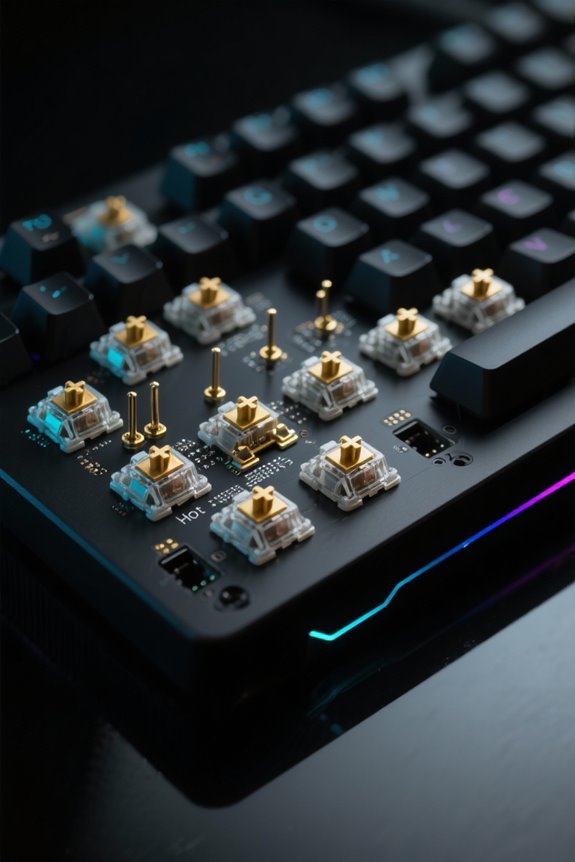
Hot-swappable technology operates through a unique system of spring-loaded sockets on the printed circuit board (PCB), allowing users to install or remove mechanical switches without soldering. These sockets utilize specialized, spring-loaded metal contacts that grip the switch pins securely. Users can easily switch between 3-pin and 5-pin MX-style switches, aligning the pins and pressing until a satisfying click confirms the installation. This design supports user flexibility in customizing their keyboard experience or easily replacing a faulty switch. While hot-swappable keyboards may incur higher manufacturing costs due to their increased complexity, they provide significant advantages regarding convenience and adaptability, appealing to both enthusiasts and casual users alike. Popular models like the RK ROYAL KLUDGE L75 demonstrate the technology’s effectiveness with its gasket mount design and versatile tri-mode connectivity options.
Advantages of Hot-Swappable Keyboards
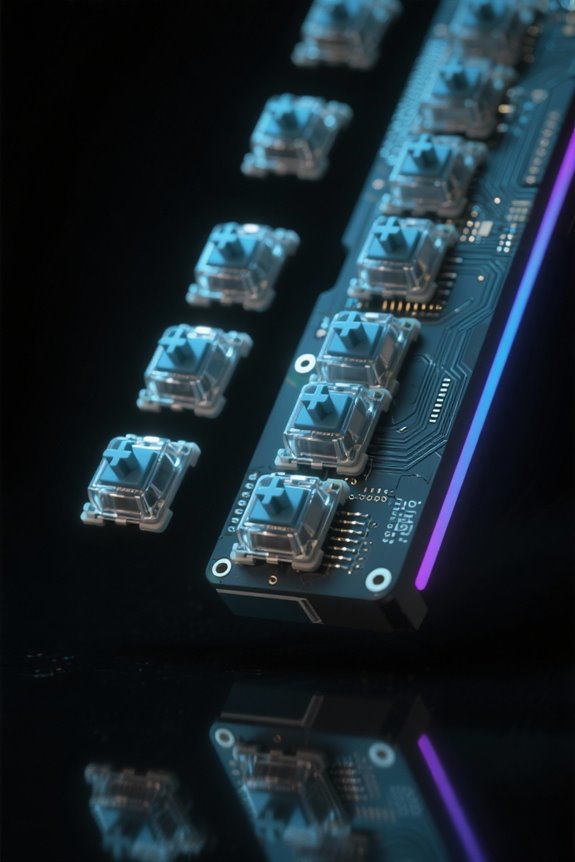
Switch enthusiasts and casual users alike benefit from the numerous advantages offered by hot-swappable keyboards. These mechanical keyboards allow for quick and easy switch replacement without the need for soldering, making them user-friendly for all skill levels. Enhanced customization options enable users to experiment with various switch types, tailoring their typing experience to personal preferences. Additionally, the independent replacement of faulty switches promotes sustainability by extending the lifespan of the keyboard and reducing electronic waste. Users can mix and match switches for different key groups, optimizing performance for tasks such as gaming versus typing. While typically more expensive than traditional soldered keyboards, hot-swappable keyboards represent a long-term cost-saving investment, allowing for incremental upgrades rather than full replacements. Popular models like the Redragon K630 Dragonborn demonstrate how hot-swappable technology can be incorporated into budget-friendly options under 2500.
Disadvantages of Hot-Swappable Keyboards
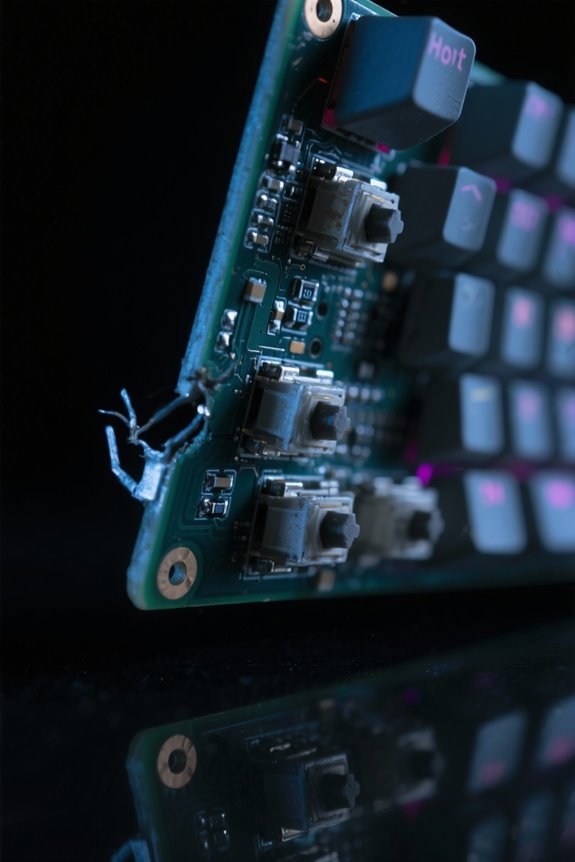
While hot-swappable keyboards offer a range of customization advantages, they are not without their drawbacks. For instance, these keyboards often incur a higher cost than traditional soldered keyboards due to the complexity of their PCB (printed circuit board) design. Moreover, the frequent switch replacements can lead to wear on the sockets, risking poor contact and reduced usability over time. Additionally, early models might limit users to around 100 insertions, despite newer versions being rated for tens of thousands of cycles. Dust and debris can accumulate more easily, resulting in key failures or unwanted key chatter. Consequently, users who do not frequently change switch types may find the benefits of hot-swappable keyboards insufficient to justify their elevated price. Similar to how ergonomic gaming mice reduce muscle strain during extended sessions, hot-swappable keyboards can provide comfort through customization, but the trade-offs must be carefully considered.
Comparing Hot-Swappable and Soldered Keyboards
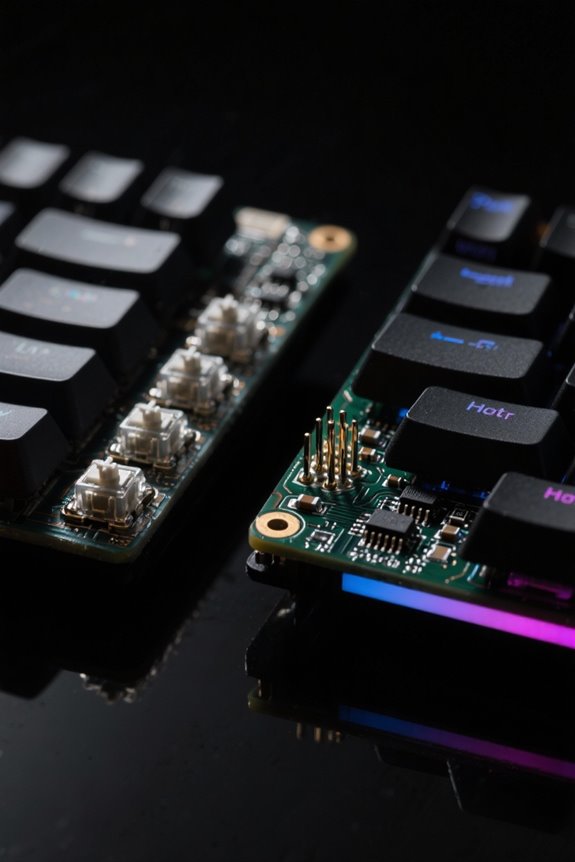
When comparing the two keyboard technologies, one finds that user preferences and typing needs greatly influence the choice between a hot-swappable and a soldered keyboard. Hot-swappable keyboards emphasize ease of customization, allowing users to change switch types effortlessly, which is appealing in the keyboard community. Conversely, soldered keyboards offer enhanced durability and a stable connection, making them ideal for performance-focused users who prioritize longevity over flexibility. Although hot-swappable options can be more expensive due to complex PCB designs, they provide a sustainable choice, letting users replace individual faulty switches instead of the entire unit. Ultimately, the decision hinges on whether one values adaptability and experimentation or seeks a reliable, permanent setup. Modern hot-swappable keyboards like the Corsair K100 feature 150 million keystrokes lifespan ratings, demonstrating their increasing durability in the market.
Compatibility With Switch Types
The world of hot-swappable keyboards opens a vast array of possibilities for enthusiasts keen on customizing their typing experience. These keyboards typically support 3-pin and 5-pin switches, allowing for extensive switch selection among compatible mechanical keyboards. The advantage of 5-pin switches lies in their added stability, though users can modify 3-pin sockets to accommodate them by clipping the extra pins. Most contemporary hot-swappable keyboards are designed to work with both switch types, enhancing flexibility. However, compatibility issues can arise with low-profile and Hall effect switches, as their designs can differ markedly among manufacturers. Thus, careful research is crucial to guarantee your switches will function correctly in your chosen hot-swappable keyboard, maximizing your customization potential. Modern keyboards like the Cherry MX 3.0S offer durability ratings of up to 50 million keystrokes while maintaining switch compatibility.
Keycap Compatibility
Keycap compatibility plays a significant role in enhancing the personalization of hot-swappable keyboards, particularly as users explore various switch types. Most hot-swappable keyboards utilize the prevalent MX-style switch‘s cross-shaped stem, facilitating the selection of compatible keycap sets. However, users must pay attention to the keycap profile and size, ensuring they align with the keyboard model’s layout for proper fit and aesthetics. Some keyboards may accommodate non-standard keycap sizes, necessitating additional research for compatibility. Furthermore, mixing materials like PBT and ABS enhances the keycaps’ durability and visual appeal, adding to the customizability. However, not all hot-swappable keyboards support the same keycap designs, so verifying specific model compatibility is essential to achieve the desired look. Similar to high-quality leather desk pads, maintaining a non-slip design helps stabilize the keyboard during intense typing sessions.
Common Use Cases for Hot-Swappable Keyboards
How does one maximize the versatility of their keyboard setup? Hot-swappable keyboards present unique opportunities for customization. Gamers may switch between tactile and linear switches to match diverse game genres, while typists and programmers can replace switches to enhance feedback and comfort, ultimately boosting productivity. Keyboard enthusiasts enjoy experimenting with various switch types, refining their ideal configurations without soldering woes. In professional settings, these keyboards enable quick replacements of faulty switches, reducing downtime and maintenance costs. Additionally, hot-swappable keyboards allow users to refresh their aesthetic appeal by changing keycaps and switches to match themes or moods. This personalization fosters a workspace that reflects individual preferences, enhancing overall satisfaction with the typing experience. Much like high refresh rates in gaming monitors enhance visual smoothness, swappable switches provide tactile precision for optimal gaming performance.
Maintenance and Long-Term Care
Maintaining a hot-swappable keyboard not only preserves its functionality but also enhances its longevity, thereby ensuring a reliable typing experience. Regular maintenance is essential; performing consistent cleaning of hot-swap sockets prevents dust accumulation, which can lead to key failures or chatter. Users can easily replace faulty keyboard switches without soldering, saving both time and repair costs. However, care must be taken during switch replacement to protect against static electricity, which can damage components. Limiting switch replacements is advisable—while earlier designs had a lifespan of about 100 insertions, modern sockets can withstand tens of thousands. Utilizing high-quality keyboard switches and maintaining a stable environment further promotes the durability of hot-swappable keyboards, ensuring long-term care is effective and impactful. Many users opt for PBT keycaps when customizing their hot-swappable keyboards due to their superior durability and resistance to wear.
Popular Hot-Swappable Keyboard Models
Among the numerous options available, several hot-swappable keyboard models stand out for their performance and versatility. The GMMK 2, priced at about $120, offers enhanced features in both 96% and 65% layouts, making it an appealing choice for efficient desk setups. In contrast, the GMMK PRO features a premium 75% layout and boasts advanced customization options, including an integrated volume knob for added functionality. Corsair’s K70 Pro Mini Wireless supports 3-pin Cherry MX-style switches, catering to gamers who desire high customizable performance. Akko provides a diverse range of hot-swappable keyboards known for their elegant designs and compatibility with various switch types, supporting both 5-pin and 3-pin mechanical keyboards, ensuring smooth shifts between different mechanical switches while typing. For enhanced gaming precision, users can pair these keyboards with copper fiber gloves that improve touch sensitivity and reduce operational delays during intensive gaming sessions.
Future Trends in Keyboard Technology
The rising popularity of hot-swappable keyboards signifies a significant shift in user expectations, particularly regarding customization and personalization. As mechanical keyboards gain traction, manufacturers are increasingly adopting hot-swappable technology, allowing users to easily replace key switches for an ideal typing experience. Advances in PCB design enhance the reliability and lifespan of these keyboards, minimizing wear-and-tear concerns with robust sockets. Additionally, the emergence of diverse key switches, including hybrids, showcases the industry’s commitment to tailored options. Gaming culture also influences this trend, as gamers demand high-performance features. Collaborations between enthusiasts and manufacturers widen the selection of customizable key switches, ensuring a dynamic future for keyboard technology that prioritizes both individual expression and performance.
Frequently Asked Questions
What Does It Mean When a Keyboard Is Hot-Swappable?
A hot-swappable keyboard allows users to easily replace mechanical switches, enhancing switch compatibility and keycap customization. This technology improves the typing experience, catering to diverse gaming preferences while maintaining build quality by replacing faulty switches effortlessly.
What Are the Downsides of Hot-Swap?
Beneath the shimmering surface of hot-swappable keyboards lie reliability issues, intimidating cost considerations, limited compatibility, and maintenance challenges. As switches dance in and out, users may experience performance impact and frustrating user experience drawbacks over time.
Are Hot-Swap Keyboards Better?
Hot-swap keyboards provide significant advantages, including key switch versatility and extensive customization options, which enhance the typing experience. They also guarantee repair ease and improved gaming performance, appealing to the enthusiast community’s diverse needs.
Is Hot-Swap Worth It?
Hot-swap technology is like a tailor-made suit for keyboards; it offers unmatched customization options and switch compatibility. For users prioritizing gaming performance and typing experience, the mechanical advantages make it well worth the investment.