

Hall Effect controllers excel in durability and accuracy compared to potentiometer controllers. They last 2-3 times longer, often maintaining performance over millions of movements without wear, while potentiometers typically falter in a few million uses due to drift and mechanical issues. Hall Effect systems operate contactlessly, ensuring stable performance in varied environments. Initial costs may be higher, but their longevity often offsets this. Stay tuned to explore more on how these technologies apply to your specific needs.
Key Takeaways
- Hall Effect controllers last 2-3 times longer than potentiometer options due to their contactless design, enhancing durability significantly.
- Potentiometer joysticks suffer from mechanical wear and may require frequent replacements after a few million movements.
- Hall Effect technology maintains consistent accuracy with minimal drift, ensuring precision in performance-critical applications.
- Potentiometer controllers can experience accuracy issues due to stick drift, necessitating periodic maintenance for recalibration.
- While Hall Effect controllers have higher initial costs, they offer lower long-term expenses due to reduced maintenance needs over time.
Understanding Potentiometer Joysticks
Potentiometer joysticks are a prevalent choice for achieving precise control in various applications, ranging from gaming consoles to industrial automation systems. These devices operate based on Ohm’s law, where a wiper arm makes mechanical contact with a resistive track. However, such physical wear can lead to stick drift, causing unintended movements. The durability of potentiometer joysticks is often compromised by dust accumulation and electromagnetic interference, affecting their performance over time. While they excel in providing precise control, their susceptibility to mechanical wear demands awareness for maintenance. Commonly utilized in setups with data acquisition units and PLCs, understanding these factors is essential for users seeking reliable, long-lasting solutions in their equipment controls. Regular maintenance assessment of thumbsticks can help identify early signs of wear and extend the controller’s lifespan through proactive repairs.
Exploring Hall Effect Joysticks
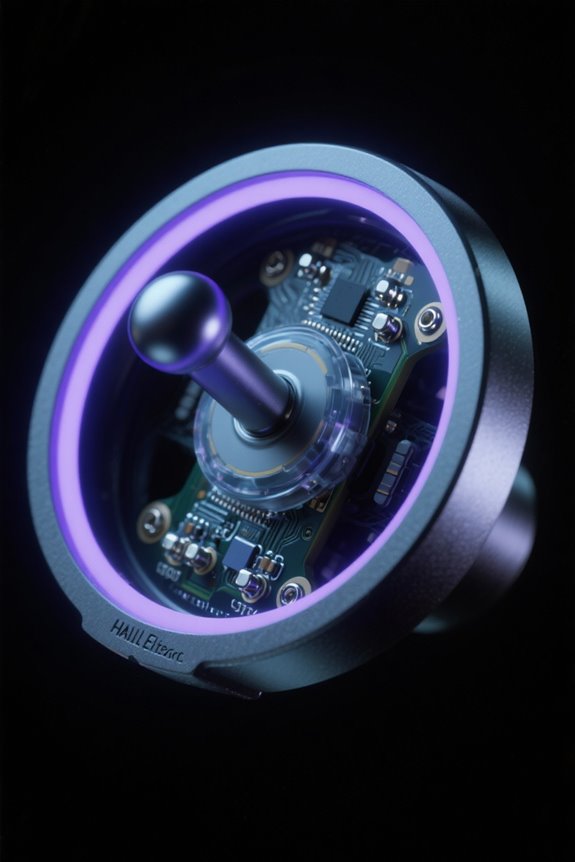
Hall Effect joysticks present a notable advancement over traditional solutions, particularly in their design and functionality. Utilizing Hall Effect Sensors, these joysticks employ a contactless magnetic system, which greatly reduces wear and tear compared to electric potentiometer joysticks. This design helps eliminate stick drift, ensuring precise movement even in demanding applications like construction and heavy machinery. Hall Effect joysticks use stable semiconductor materials, maintaining accurate positioning across varying temperatures. Additionally, their performance remains consistent over time, needing only a stable 5VDC power supply, thereby avoiding issues common in potentiometers. Ideal for high-vibration environments, they offer smooth control, enhancing user experience in high-stakes gaming, where precision is essential. In sum, Hall Effect joysticks set a new standard in durability and accuracy. Similar to anti-drift precision control found in modern gaming controllers, Hall Effect technology ensures reliable and accurate input detection throughout extended gaming sessions.
Key Advantages of Hall Effect Sensors

The advantages of Hall Effect sensors are substantial, particularly in the domain of joystick technology. These sensors operate contactlessly, greatly enhancing durability by minimizing mechanical wear, unlike potentiometer joysticks that degrade over time due to friction. Hall Effect technology boasts longevity, often lasting 2-3 times longer, which cuts replacement costs and frequency. Additionally, their ability to detect changes in magnetic fields guarantees improved accuracy and performance, eliminating the stick drift commonly associated with worn potentiometers. This consistency is vital in competitive gaming scenarios. Furthermore, Hall Effect sensors provide enhanced environmental resistance, protecting against dust, moisture, and temperature fluctuations, thereby guaranteeing reliable operation in various conditions. Overall, the precision and robustness of Hall Effect sensors elevate joystick performance considerably. Modern Hall Effect controllers feature 1000Hz polling rate for exceptional responsiveness and precision during intense gaming sessions.
Comparing Lifespan and Durability
In the domain of joystick technology, lifespan and durability play fundamental roles in determining overall performance and reliability. Potentiometer-based joysticks, subject to mechanical wear, typically endure a few million movements before needing replacement. In stark contrast, Hall Effect sensors boast a lifespan 2-3 times longer due to their lack of mechanical contact points, eliminating wear. This mechanical advantage translates into superior durability, particularly in high-shock or vibration-rich environments where potentiometers can falter. Additionally, Hall Effect controllers exhibit enhanced environmental resistance, maintaining performance across varying temperatures and conditions, while potentiometers may experience drift, affecting accuracy. Regular maintenance is vital for potentiometer systems, as wear necessitates cleaning and component replacement, unlike Hall Effect controllers, which demand minimal upkeep, ensuring prolonged operational life. Similar to modern gaming headsets that prioritize low-latency gameplay, Hall Effect controllers provide instantaneous response times that enhance user experience and precision.
Performance and Precision: A Side-by-Side Analysis

How do control mechanisms influence a player’s accuracy in fast-paced gaming environments? Hall Effect controllers, operating without mechanical contact, provide superior accuracy and durability compared to potentiometer counterparts. Unlike potentiometers, which may exhibit inaccuracies due to variable resistance and wear, Hall Effect sensors mitigate stick drift, enhancing precision. In fact, Hall Effect controllers are reported to last 2-3 times longer, enduring millions of movements without degradation. This durability guarantees consistent performance, vital in high-stakes scenarios where precision is paramount. The smoother, more linear input response of Hall controllers further elevates aiming capabilities, making them ideal for competitive gaming. While potentiometers may falter under demanding conditions, Hall Effect technologies maintain reliability, making certain gamers remain at the top of their game. The advanced haptic feedback capabilities of modern controllers complement these precision controls by providing realistic tactile sensations that enhance overall gameplay immersion.
Maintenance Needs: Hall Effect vs. Potentiometer
Maintenance needs considerably differ between Hall Effect and potentiometer controllers, influencing long-term user experience and performance. Hall Effect sticks offer minimal maintenance due to their contactless operation, eliminating the need for regular cleaning or replacement of worn-out components. Conversely, potentiometer controllers require routine maintenance because their moving parts are susceptible to wear and dust accumulation, possibly resulting in stick drift. While Hall Effect sensors can last 2-3 times longer than their potentiometer counterparts—thanks to the absence of physical contact—potentiometers often exhibit inconsistent performance, needing recalibration to maintain accuracy. The durability and reliability of Hall Effect technology translate into less time and cost spent on maintenance activities, making it a more dependable choice for users seeking consistency over the long term. Similar to the ergonomic design considerations found in premium controllers, both types require evaluation of build quality and comfort for optimal long-term usage.
Choosing the Right Controller for Your Needs
Choosing the right controller involves a careful consideration of various factors, including durability, precision, and application environment. Hall effect controllers typically excel in these areas, boasting 2-3 times the lifespan of potentiometer controllers due to their non-contact operation, which drastically reduces wear and tear. For those in high-vibration or shock environments, Hall effect sensors offer unparalleled accuracy, making them suitable for competitive gaming scenarios where even minor drift can adversely affect performance. Meanwhile, potentiometer controllers may encounter issues like drift, complicating maintenance needs. Budget-conscious users may appreciate that Hall effect controllers often entail lower replacement costs over time, further solidifying their position as the preferable choice for both durability and accuracy in diverse applications. The GameSir G7 SE demonstrates the advantages of Hall Effect technology with its pulse-type vibration feedback that enhances the gaming experience while maintaining consistent performance.
Frequently Asked Questions
Is Hall Effect Better Than Potentiometer?
In accuracy comparisons, Hall Effect benefits outshine potentiometer limitations, particularly in demanding applications. While initial costs may be higher, reduced maintenance requirements and user preferences for durability make Hall Effect a superior choice for many scenarios.
Is Hall Effect More Durable?
Hall effect technology demonstrates superior durability compared to potentiometers due to its better wear resistance and environmental resistance. These factors minimize maintenance requirements, resulting in lower cost implications and enhanced longevity in various applications.
How Long Do Hall Effect Controllers Last?
Hall Effect controllers often exhibit a lifespan exceeding ten years, influenced by usage scenarios and environmental factors. Factors such as material quality, temperature effects, pressure ratings, and maintenance practices all play essential roles in this lifespan comparison.
Do Hall Effect Switches Last Longer?
Hall Effect switches indeed last longer than their counterparts. Their magnetic sensors guarantee superior switch longevity, enhanced wear resistance, and reliability factors, making them ideal for industrial applications and resilient against various environmental impacts.