

Gaming chairs and office chairs differ greatly in lumbar support design philosophy. Gaming chairs often feature adjustable lumbar cushions, promoting comfort during extended gaming sessions. In contrast, ergonomic office chairs, which include models like the Aeron, focus on integrated lumbar support that aligns with the spine’s natural curve. This design can reduce lower back pain by up to 40%. Choosing the right chair involves considering personal needs and health implications, so explore the nuances further to make an informed decision.
Key Takeaways
- Gaming chairs emphasize adjustable lumbar support and removable cushions, allowing for personalized comfort tailored to gamers’ preferences.
- Office chairs feature integrated lumbar support systems that promote natural spine alignment and reduce lower back pain during prolonged use.
- Ergonomic office chairs are designed to maintain a neutral spine position, enhancing productivity and comfort over long working hours.
- While gaming chairs prioritize aesthetics and comfort, office chairs focus on functionality and ergonomic features for long-term health benefits.
- The choice between adjustable and fixed lumbar support impacts individual comfort and spinal health, depending on personal preferences and usage.
Understanding Lumbar Support
When it comes to understanding lumbar support, the importance of ergonomics cannot be overstated. Ergonomic design plays a pivotal role in preventing back pain and enhancing posture during extended use. Gaming chairs often feature adjustable lumbar support cushions that are removable, catering to comfort preferences. In contrast, office chairs are designed with built-in lumbar systems that conform to the spine’s natural curve, promoting a neutral spine position. While gaming chairs may reduce lumbar stiffness by 4.1% compared to standard models, they occasionally sacrifice ergonomic alignment for aesthetics. Adjustable features in office chairs greatly improve user comfort, allowing for a more tailored seating experience. As a result, choosing the right chair reflects the balance between function and style to guarantee ideal well-being. Quality gaming chairs incorporate high-density foam padding to ensure optimal support and resistance to long-term compression.
The Purpose of Lumbar Support in Different Chair Types
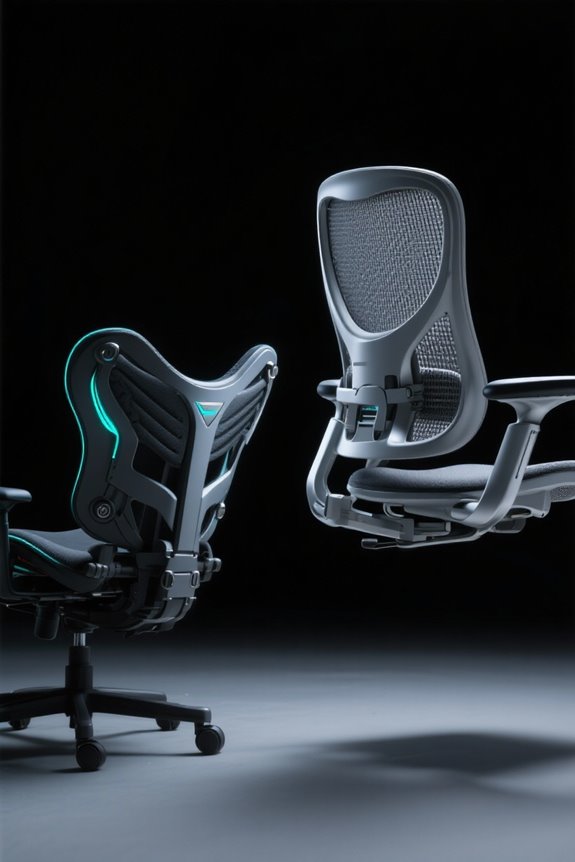
While both gaming chairs and office chairs serve the objective of providing lumbar support, their distinct design philosophies cater to different user needs and environments. Gaming chairs often feature adjustable lumbar support and additional support pillows, enhancing comfort during dynamic seating positions typical of long gaming sessions. This design aims to promote good posture and reduce discomfort while engaged in competitive play. In contrast, ergonomic office chairs prioritize integrated lumbar support systems designed to align with the spine’s natural curve, vital for maintaining form over extended periods at a desk. The adjustable lumbar support in these chairs allows users to customize settings, effectively reducing lower back pain by up to 40%, emphasizing the importance of tailored support in both chair types. For optimal ergonomic benefit, chairs like the GABRYLLY model feature high-density foam padding that supports weights up to 400 lbs while maintaining proper spinal alignment.
Design Elements of Gaming Chair Lumbar Support
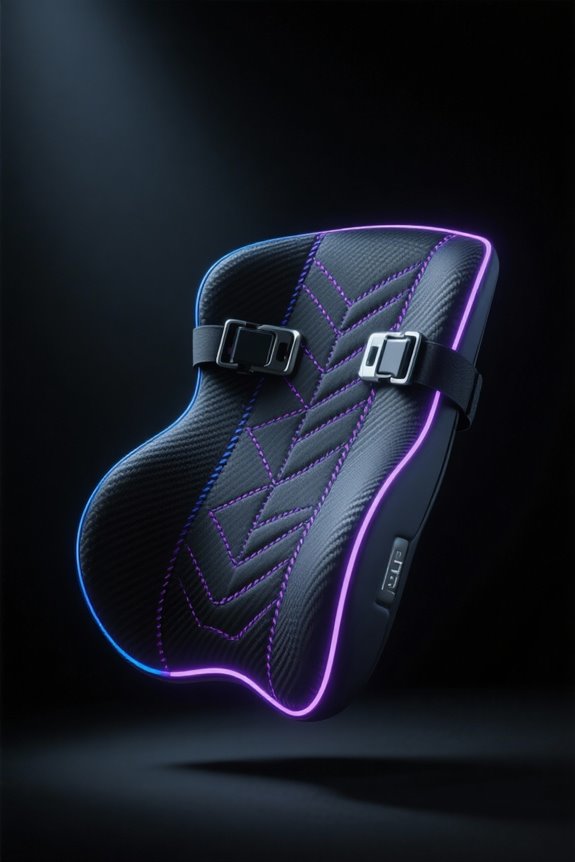
Gaming chairs are designed with several specific elements to enhance lumbar support, catering especially to the needs of avid gamers. Key features include adjustable lumbar support integrated into the high-back design, allowing users to customize the firmness and height based on their unique spinal curvature. Many gaming chairs incorporate external lumbar support pillows, enabling even more personalized comfort for extended gaming sessions. The bucket-style seat design cradles the lumbar area, promoting better spinal alignment and improving overall seating comfort. Studies have shown that these ergonomic designs greatly reduce thoracic and lumbar muscle stiffness. This combination of adjustable features and thoughtful design makes gaming chairs particularly effective at providing lumbar support during long hours of gameplay, enhancing the overall gaming experience. Advanced models like the 7-point massage system chairs target multiple areas from neck to thighs, offering therapeutic relief during intense gaming sessions.
Design Elements of Office Chair Lumbar Support
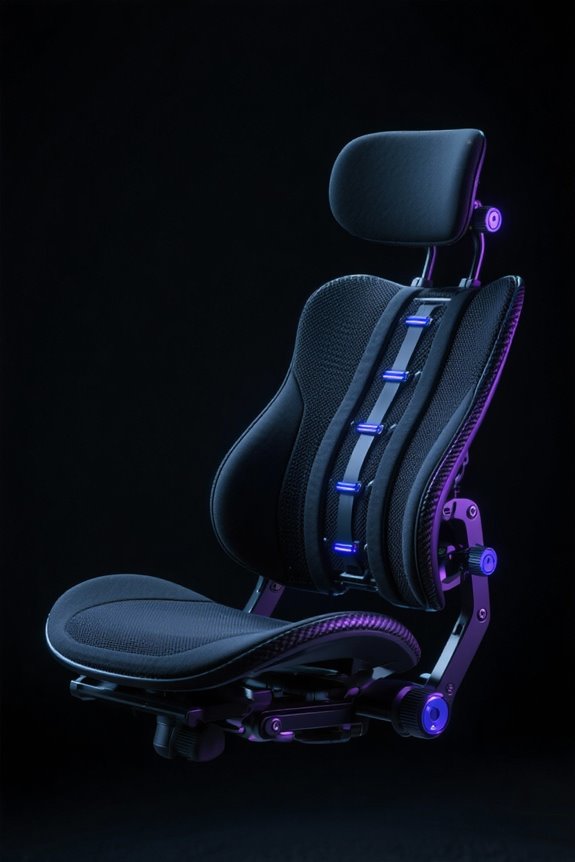
Ergonomic design is a cornerstone of modern office chair lumbar support systems. These chairs typically feature adjustable lumbar support, allowing users to customize the support to the natural curve of their spines, which is vital for maintaining good posture during extended periods of sitting. Dynamic lumbar support is an essential aspect, enabling the backrest to move with the user and promote spinal alignment. Advanced models may incorporate pneumatic adjustments for tailored comfort across various body types. Users often report reduced lower back pain and increased productivity due to effective lumbar support. Research supports that well-designed ergonomic office chairs can greatly enhance productivity by minimizing discomfort, ultimately contributing to a more efficient workspace. When comparing to gaming desks, proper lumbar support becomes even more crucial as adjustable height ranges from 28 to 46 inches in modern ergonomic furniture can significantly impact posture during extended gaming sessions.
Aesthetic Considerations in Gaming Chair Design
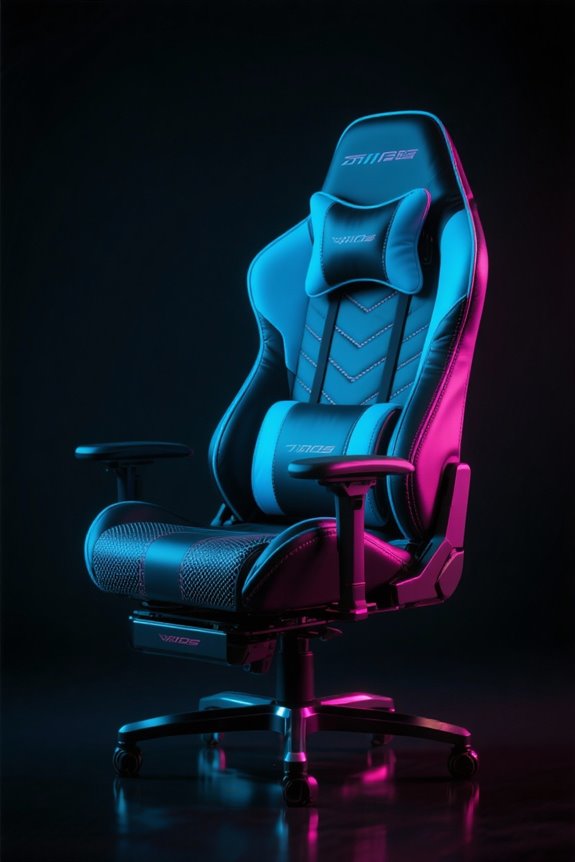
Aesthetic considerations play an essential role in the design of gaming chairs, as they aim to cater to the preferences of gamers who appreciate bold and engaging visuals. Gaming chairs often feature a sporty aesthetic with vibrant colors and racing-inspired elements. The inclusion of bucket seats and high backs guarantees an immersive experience, while the use of PU leather and high-density foam enhances both comfort and aesthetic appeal. Customizable features, such as RGB lighting and interchangeable covers, allow users to tailor their setup to individual tastes. Unlike traditional office chairs, which favor subtle professionalism, gaming chairs prioritize flair, making them ideal for personal gaming spaces. Ultimately, the design elements resonate deeply with gamers, reflecting their dynamic lifestyle and preferences. Popular models like the GTRACING gaming chair incorporate multicolor LED strips that enhance both aesthetics and gameplay immersion through customizable lighting effects.
Ergonomic Focus in Office Chair Design
Comfort is a vital aspect of office chair design, especially as many professionals spend an average of eight hours seated each day. Ergonomic office chairs are engineered to support the natural curve of the spine, with a strong emphasis on lumbar support. Features like adjustable lumbar support allow users to customize the chair, promoting proper posture and maintaining a neutral spine position. Studies indicate that these ergonomic designs can markedly reduce the risk of musculoskeletal issues, with effective lumbar support alleviating muscle stiffness. Many models also include adjustments for seat height and depth, ensuring ideal alignment with the user’s lower back. Overall, the focus on ergonomic features enhances both comfort and productivity in prolonged work settings. Similar to how adjustable footrests promote better posture in gaming setups, office chairs incorporate ergonomic elements to reduce neck and back strain during extended periods of use.
Adjustable vs. Fixed Lumbar Support
The alignment of lumbar support is often a key factor in enhancing posture and reducing discomfort during extended periods of sitting. Adjustable lumbar support allows users to customize the position and firmness, aligning with their spine’s natural curve. This feature is essential for prolonged sitting, particularly in ergonomic office chairs. Conversely, fixed lumbar support provides consistent, targeted backing, reducing discomfort related to poor posture. Many gaming chairs employ external lumbar pillows that can be relocated but often lack the integrated adjustments found in ergonomic designs. Research indicates that customizable lumbar support systems can markedly reduce muscle stiffness, enhancing performance during activities, whether in gaming or professional tasks. Ultimately, the choice between adjustable and fixed support depends on individual preferences and needs. The RESPAWN 110 Pro demonstrates advanced lumbar support capabilities with its dual-layer, high-density foam padding system designed specifically for extended comfort.
Impact of Lumbar Support on Posture
While many individuals may overlook the influence of lumbar support on posture, its role is essential in preventing spinal misalignment during extended periods of sitting. Proper lumbar support, such as that found in ergonomic office chairs, is designed to maintain the spine’s natural curve, which promotes better posture and reduces lower back pain. In contrast, gaming chairs frequently utilize external pillows or adjustable systems, often prioritizing aesthetics over precise ergonomic support. Studies indicate that participants using gaming chairs experienced a 4.1% reduction in lumbar stiffness compared to those in Aeron office chairs. Both chair types aim to enhance posture, yet users must guarantee their lumbar support aligns correctly with their body to avoid potential strain after long periods of use. Modern gaming chairs like the high-density foam cushioning found in FAB&DELUXE models provide additional ergonomic benefits for maintaining proper spinal alignment during extended gaming sessions.
Comfort Levels: Gaming Chair vs. Office Chair
Selecting the right chair involves evaluating various aspects of comfort, particularly when comparing gaming chairs to office chairs. Gaming chairs, often featuring adjustable lumbar pillows, excel in comfort during gaming sessions. However, a study from the Journal of Electronic Gaming and Esports revealed that 58% of participants preferred office chairs due to superior comfort levels and reduced muscle stiffness. Office chairs prioritize ergonomic design, promoting a neutral spine position essential for alleviating back pain during extended hours of work. While gamers may appreciate the relaxed vibe of gaming chairs, those working long hours often find office chairs provide better adaptability and support. Ultimately, both chair types offer distinct advantages depending on the user’s activity and duration of use. Modern gaming chairs like the GTPLAYER feature memory foam support and can recline up to 150 degrees for enhanced comfort during extended gaming sessions.
The Role of Support Pillows in Gaming Chairs
Support pillows play a pivotal role in the design and functionality of gaming chairs, specifically targeting the lumbar region to enhance user comfort during extended gaming sessions. These support pillows are often made of high-density foam, ensuring both structural integrity and cushioning. Adjustable lumbar support allows users to tailor these features according to personal comfort and body shape, contributing to better posture. Studies highlight that gaming chairs equipped with support pillows can lead to a 4.1% reduction in lumbar stiffness when compared to standard office chairs. This ergonomic chair design not only promotes comfort but also enhances productivity, making long gaming sessions more enjoyable. The sporty aesthetic of gaming chairs further appeals to gamers while prioritizing their health and comfort. Most gaming chairs include USB-powered massage lumbar support and heat functions that work together to provide effective muscle tension relief.
Evaluating Long-Term Health Implications
How do different chair designs impact long-term health? Ergonomic office chairs generally feature adjustable lumbar support, essential for maintaining the spine’s natural curvature during prolonged use, thereby alleviating back pain. Research indicates that gaming chairs may enhance comfort, with users reporting reduced muscle stiffness in the lumbar region compared to traditional office chairs. However, the aesthetic-focused design of gaming chairs can lead to discomfort over time, especially during extended periods of play, as they lack thorough ergonomic features vital for productivity tasks. In contrast, well-designed office chairs greatly reduce the risk of musculoskeletal disorders, promoting healthier sitting habits. Ultimately, both chair types emphasize the importance of adjustability for long-term comfort and health.
User Preferences: Gaming Chair vs. Office Chair
User preferences greatly differ when it comes to choosing between gaming chairs and office chairs, underscoring the distinct purposes they serve. Gaming chair users often prioritize aesthetics and comfort, with 58% valuing ergonomic designs that include adjustable lumbar support tailored to alleviate back discomfort during extended gaming sessions. Conversely, office chair users emphasize functionality and professional appearance, favoring thorough back support and features that promote better posture. Survey data reveals that while 29% of gamers appreciate the visual appeal of gaming chairs, the majority of office chair users prioritize adjustable features to enhance their productivity during long hours of work. This divergence highlights the importance of considering intended use when selecting a chair, balancing comfort with ergonomic health needs.
Recommendations for Chair Selection Based on Activity
Selecting the right chair for specific activities plays a fundamental role in overall comfort and productivity. For gamers engaged in long hours, a gaming chair with adjustable lumbar support and a high-back design is essential to alleviate lumbar stiffness, which studies show can drop by 4.1% compared to traditional office chairs. Conversely, office chairs are crafted to support ergonomic principles, ensuring natural posture alignment and adjustable lumbar support to avoid discomfort during extended work sessions. When making a chair selection, gamers may favor aesthetics and padding for leisure use, while office workers should prioritize ergonomic support to enhance productivity and health. It’s imperative to evaluate individual needs to find the perfect balance of comfort and functionality.
Future Trends in Chair Design and Lumbar Support
The evolution of chair design is poised to significantly enhance lumbar support in both gaming and office environments. Future designs are expected to feature adjustable lumbar support systems that dynamically adapt to your posture, ensuring comfort throughout the day. With smart technology, chairs may incorporate sensors to monitor spine alignment, providing real-time feedback to promote healthy sitting habits—a game changer for prolonged use. Additionally, ergonomic research will focus on creating lumbar support that alleviates discomfort while encouraging engagement. Sustainable materials will likely gain prominence, emphasizing eco-friendly production without compromising support. Furthermore, innovations like memory foam and breathable materials are anticipated to reduce pressure points, enhancing overall comfort during both gaming marathons and lengthy work sessions.
Frequently Asked Questions
What Makes a Gaming Chair Different Than an Office Chair?
Gaming chairs prioritize comfort features and design aesthetics for gamers, offering unique adjustability options and often lower price points. In contrast, office chairs emphasize material quality and ergonomic support for professionals, targeting a different audience.
Do Gaming Chairs Have Good Lumbar Support?
Like a well-tuned instrument, gaming chairs often feature superior lumbar support designed for comfort levels and posture benefits. User preferences indicate they prioritize material quality, showcasing significant advantages in design comparison with traditional seating options.
Which Is More Comfortable, a Gaming Chair or an Ergonomic Chair?
Comfort varies based on user preference. Ergonomic chairs often promote better sitting posture and alleviate back pain with adjustable design, while gaming chairs excel in cushion quality and style, potentially enhancing productivity levels during leisure activities.
Why Are Gaming Chairs Not Ergonomic?
Studies reveal that up to 70% of gamers experience discomfort after prolonged use of gaming chairs. Their materials often lack necessary lumbar support variability, compromising posture alignment, while prioritizing design aesthetics over target audience needs during extended seating durations.