

Task lighting and ambient lighting serve distinct purposes in computer workspaces. Task lighting focuses on specific areas, delivering 450-700 lumens for detailed tasks, while ambient lighting provides an overall, even light to reduce harsh shadows. Ideal color temperatures for task lighting range between 3500K and 4500K, mimicking daylight. Don’t get me wrong, balancing these two types can enhance productivity by as much as 20%. Understanding their differences can greatly improve your workspace experience, and there’s much more to reflect on.
Key Takeaways
- Task lighting enhances focus and productivity with higher brightness, ideally delivering 450-700 lumens, tailored for specific activities like computer work.
- Ambient lighting serves as the general illumination foundation, creating a comfortable environment with even light distribution to reduce eye strain.
- The ideal color temperature for task lighting is between 3500K and 4500K, while ambient lighting benefits from warmer tones around 2700K to 3000K.
- A balance of ambient and task lighting minimizes shadows and glare, promoting a more efficient workspace and better visual comfort during extended work hours.
- Adjustable task lamps are essential for optimizing lighting direction, while effective ambient lighting can enhance mood and boost overall productivity by up to 20%.
Importance of Proper Lighting in Workspaces
Proper lighting in workspaces is not just a matter of aesthetic appeal; it is a fundamental component that can greatly enhance productivity and well-being. Research indicates that inadequate lighting conditions can lead to a 20% decrease in efficiency. Ambient lighting provides overall illumination, creating a welcoming atmosphere ideal for sustained focus during work hours, while task lighting targets specific activities, reducing eye strain and enhancing visibility. A blending of both lighting types not only minimizes glare and shadows but also fosters creativity within well-lit environments. Ideal color temperatures for workspace lighting should generally range from 3500K to 4500K, closely mimicking daylight and helping maintain alertness, thereby considerably improving overall productivity and ensuring a balanced lighting setup conducive to effective work. Modern eye-care technology in LED desk lamps helps minimize strain during prolonged computer use while consuming up to 85% less energy than traditional incandescent lighting.
Understanding Task Lighting

While many people may overlook the significance of task lighting, it can dramatically improve focus and efficiency during specific activities. Task lighting provides focused illumination for tasks like reading and computer work, with a recommended brightness exceeding that of ambient lighting. Ideal color temperatures between 3500K and 4500K mimic daylight, effectively reducing eye strain and enhancing alertness. Proper placement is essential; lights should be positioned to the side of the workspace to minimize glare on screens. Adjustable lamps, particularly LED desk lamps, allow users to fine-tune where the focused light falls, preventing harsh shadows. For peak performance, task lighting typically offers between 450 to 1000 lumens, ensuring clarity and detail in various activities within the workspace. Modern task lighting solutions like gooseneck desk lamps offer exceptional flexibility for precise illumination control while consuming up to 90% less energy than traditional bulbs.
Benefits of Task Lighting in Computer Work
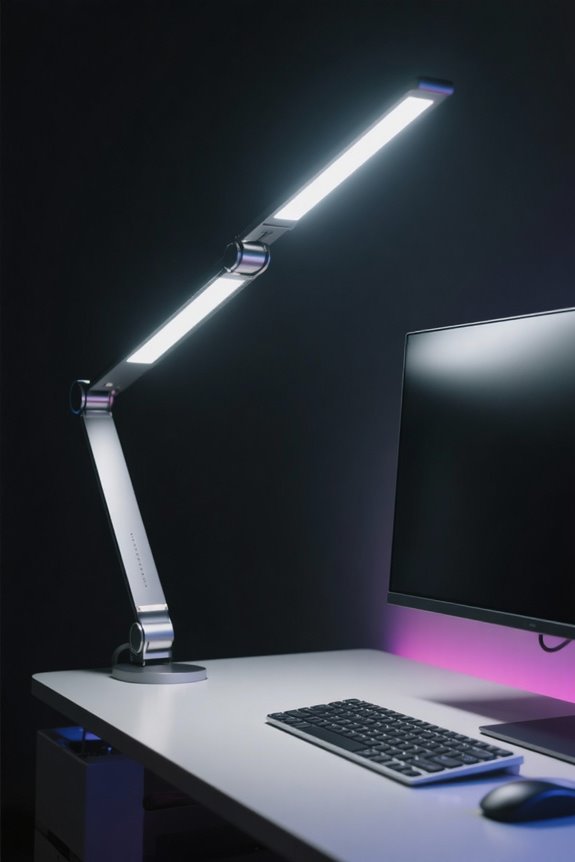
Task lighting plays an essential role in enhancing the computer work experience, particularly when it comes to reducing eye strain and improving overall visibility. It offers focused illumination that directly targets work areas, thereby minimizing glare on screens. Research suggests that effective task lighting can boost productivity by up to 20%. Suitable desk lamps should feature adjustable brightness and a lumen range between 450-700 lumens, which supports alertness during extended computer work. A color temperature of 3500–4500 K is suitable for creating optimum contrast without causing fatigue. By preventing shadows and highlighting necessary areas, task lighting improves clarity and concentration. Don’t get me wrong—while ambient lighting contributes to visual appeal, task lighting is indispensable for detailed tasks. Modern LED eye-care technology in architect desk lamps helps reduce blue light exposure and flicker for extended comfort during computer work sessions.
Defining Ambient Lighting

Ambient lighting serves as the foundational layer of illumination in a workspace, providing an even distribution of light that fosters a comfortable and inviting environment. This type of lighting enhances visual comfort by creating overall brightness while reducing harsh shadows and glare. Recommended color temperatures for ambient lighting range from 2700K to 3000K, promoting a warm atmosphere that boosts productivity. Effective fixtures, including ceiling lights, wall sconces, and LED strips, can minimize the need for additional light sources, creating a cohesive lighting setup. It’s vital to balance ambient lighting with task lighting to adequately address brightness levels, ensuring minimal eye strain. A well-designed environment greatly influences employee mood and focus, ultimately enhancing overall productivity in the workspace. Modern LED solutions with stepless dimming options allow precise control over ambient lighting levels to accommodate changing workspace conditions throughout the day.
The Role of Ambient Lighting in the Office

In an office setting, the importance of ambient lighting cannot be overstated, as it lays the groundwork for a well-illuminated workspace. Ambient lighting serves as the primary source of illumination, providing overall brightness that eliminates harsh shadows, thereby fostering a welcoming atmosphere conducive to productivity. Ideally, the color temperature for ambient lighting should fall between 2700–3000 K to create a warm, inviting environment while minimizing visual strain. This lighting should effectively illuminate walls, ceilings, and floors, complementing task lighting to balance the workspace and avoid glare. Additionally, using fixtures with translucent shades can enhance lighting quality, rendering it softer and reducing reflections. Utilizing proper cable management solutions beneath your desk can help prevent shadows and maintain consistent ambient lighting throughout your workspace. Ultimately, a well-designed ambient lighting setup greatly boosts mood and productivity within any office environment.
Task Lighting Strategies for Optimal Use
Creating an effective workspace can often hinge on the right mix of lighting, where the interplay between ambient and task lighting matters greatly. Task lighting should be strategically positioned at the side of the workspace to minimize glare, while providing focused illumination for activities such as reading or computer work. For ideal visibility, look for task lamps that deliver at least 700 lumens. Adjustable desk lamps are ideal, allowing users to direct light away from screens, thereby reducing eye strain. A color temperature between 3500K and 4500K is preferred to replicate daylight brightness. In addition, implement a lighting strategy that maintains a 3:1 ratio of task light to ambient lighting, ensuring considerably brighter task surfaces for enhanced productivity and visibility. When using gaming headsets like the Corsair Void v2, proper task lighting becomes especially important for extended sessions that can last up to 70 hours of continuous gameplay.
Best Practices for Ambient Lighting
Illuminating a workspace effectively relies on the careful application of ambient lighting practices that enhance overall visibility while fostering a comfortable atmosphere. Ambient lighting provides essential overall brightness, eliminating harsh shadows that can cause eye strain. A recommended color temperature of 2700–3000 K creates a warm aura conducive to productivity. Proper placement of ceiling fixtures or LED strips is vital; aiming them towards walls enriches the space while subtly softening harsh light. Incorporators should consider diffusers or translucent shades for a calming effect. It’s important to balance ambient lighting with task lighting, ensuring task surfaces are three times brighter than the surrounding area, as both lighting types considerably affect mood and ultimately aid productivity in computer workspaces. For optimal visibility when using compact keyboards, many users pair ambient lighting with RGB backlit options that provide additional illumination during extended typing sessions.
Balancing Task and Ambient Lighting
Achieving an effective interplay between task and ambient lighting is essential for any workspace, particularly when enhancing productivity and minimizing eye strain. Research indicates that inadequate lighting can reduce efficiency by up to 20%. Task lighting should provide focused illumination, delivering 450-700 lumens for ideal visibility without glare. In contrast, ambient lighting serves as the primary light source, ideally with a color temperature of 2700–3000 K for a welcoming atmosphere. When balancing these light types, task lights should be brighter, with a color temperature between 3500–4500 K to enhance focus. Proper placement of task lights at the side reduces shadows, while ambient lighting effectively illuminates walls and ceilings—both key to fostering productivity in your workspace.
Recommended Fixtures for Task Lighting
When selecting fixtures for task lighting, adjustable desk lamps emerge as a standout choice, particularly for computer workspaces. These lamps provide focused illumination, helping reduce eye strain and glare. For peak performance, look for models offering between 450-700 lumens, with LED task lights being especially effective for their bright output without excessive heat. Maintain a color temperature of 3500K to 4500K for comfort. Incorporating under-cabinet lighting or LED strips can further enhance overall illumination, ensuring a well-lit area for documents. Swing-arm lamps allow for customizable light direction—ideal for adapting from typing to reading tasks. Strategically positioning task lighting to the side of your screen minimizes glare while enhancing surface brightness above ambient lighting levels. Similar to ergonomic hand-rests in gaming peripherals, proper task lighting positioning promotes comfort during extended computer sessions.
Enhancing Mood With Ambient Lighting
How can the right ambient lighting transform a workspace into a haven of productivity? Ambient lighting, with a color temperature of 2700K–3000K, creates a warm atmosphere that considerably enhances mood. Effective lighting helps to improve visual comfort, reducing eye strain and minimizing harsh shadows, fostering a well-lit space. Research indicates that proper ambient lighting can boost overall mood and productivity by up to 20%. Similar to how high data transfer speeds enhance VR experiences, proper ambient lighting plays a crucial role in optimizing workspace performance. Incorporating ambient lighting alongside task lighting is crucial for maintaining a balanced workspace, encouraging well-being and creative thinking. Utilizing fixtures with translucent shades diffuses light, creating a calming environment while diminishing glare and harsh reflections. To conclude, thoughtful ambient lighting not only elevates the work experience but also encourages a more productive mindset.
The Impact of Color Temperature on Productivity
While the interplay of light and productivity may seem subtle, color temperature emerges as a critical factor influencing workplace efficiency. Cool white light, typically ranging from 5000K to 6500K, closely mimics natural daylight, enhancing alertness and cognitive function during work hours. In contrast, neutral light, between 3500K and 4100K, provides a balance that supports concentration while helping to reduce eye strain. Research shows that environments with a color temperature around 4000K can boost mood and concentration levels by 15% compared to warmer tones like 2700K to 3000K, which are better suited for relaxation than active productivity. Properly adjusted color temperature not only improves visual clarity but also aligns with circadian rhythms, ultimately promoting sustained energy and efficiency. Much like how weighted base designs in microphone stands minimize vibrations for optimal audio quality, proper lighting temperature stabilizes the visual environment for enhanced workplace performance.
Common Mistakes to Avoid in Office Lighting
Effective office lighting is paramount for maintaining productivity and comfort, yet several common mistakes often undermine these goals. Many rely solely on overhead ambient lighting, creating harsh lighting that leads to increased eye strain during computer work. Additionally, neglecting task lighting can result in inadequate brightness; a lumens range of 450-1000 is ideal for detailed tasks. Incorrect positioning of task lights, like desk lamps directly in front of screens, can cause distracting glare. Furthermore, using warm light (2700K-3000K) can induce relaxation instead of focus, while cooler light (4000K-5000K) enhances alertness. Lastly, failing to utilize lighting controls like dimmers restricts adaptability, limiting the customization essential for various activities throughout the day.
Frequently Asked Questions
What Is the Best Lighting for a Workspace?
Effective workspace lighting combines ideal fixture design and light positioning to enhance productivity levels. A balanced approach, considering color temperature and workspace ergonomics, minimizes eye strain, improves mood enhancement, and maintains energy efficiency while managing lighting costs.
What Kind of Lighting Is Best for Computer Work?
Like a well-tuned orchestra, the best lighting for computers harmonizes ergonomic considerations with fixture types, balancing color temperature and lighting intensity. This synergy reduces glare, minimizes eye strain, and amplifies productivity according to personal preferences and workspace layout.
What Is the Difference Between Ambient Lighting and Task Lighting?
Ambient light serves to illuminate a space uniformly, enhancing visual comfort, while task light focuses on specific areas with higher light intensity. Proper color temperature and positioning of lighting fixtures improve workspace ergonomics and productivity, reducing eye strain.
What Is the 5 7 Lighting Rule?
Like a conductor harmonizing an orchestra, the 5-7 Lighting Rule recommends task lighting be 5-7 times brighter than ambient light, enhancing workspace comfort, reducing eye strain, improving productivity, and elevating design aesthetics through strategic light placement.