


Electronics overheat due to inadequate airflow, dust accumulation, and poor thermal design. Effective airflow is critical; maintaining a one-inch clearance around devices can help. When dust builds up, it obstructs airflow and acts as an insulator, potentially raising temperatures over 120°F. Poor thermal design, such as weak thermal interface materials, exacerbates these issues. Don’t get me wrong; regular maintenance can mitigate these risks considerably. Understanding these factors is essential for peak performance, and more insights await you.
Key Takeaways
- Inadequate airflow due to poor design or enclosed spaces can lead to significant overheating, often raising internal temperatures by 10 to 20 degrees over ambient levels.
- Dust accumulation obstructs airflow and traps heat, significantly reducing cooling system efficiency and increasing the risk of thermal overload.
- Excessive heat above 120°F can cause catastrophic failures in electronics, emphasizing the importance of effective thermal design and heat dissipation methods.
- Regular maintenance, including dust removal and airflow assessments, is essential to prevent overheating and prolong the lifespan of electronic devices.
- The selection of thermal interface materials and the placement of components critically impact the overall thermal management and efficiency of electronic systems.
Understanding the Basics of Thermal Management
Understanding the basics of thermal management is crucial for anyone involved in designing or using electronic devices, as ineffective heat dissipation can lead to serious operational issues. Effective thermal management is essential; overheating can greatly reduce a device’s functionality and shorten its lifespan. Thermal resistance, measured in °C/W, indicates how efficiently heatsinks dissipate heat, with lower values reflecting superior cooling solutions. Additionally, thermal interface materials (TIM) enhance heat transfer by filling gaps between surfaces, improving conductivity in the Z-direction. Various cooling methods, including heat pipes and thermoelectric coolers, are essential for high-performance electronics. Utilizing thermal simulations, like Computational Fluid Dynamics, aids in optimizing designs by predicting temperature distributions, ensuring efficient heat management and preventing overheating during operation. Modern keyboards like the EPOMAKER x Aula F75 incorporate sound-absorbing design features that can affect heat distribution and thermal management within the device.
The Importance of Airflow in Electronics
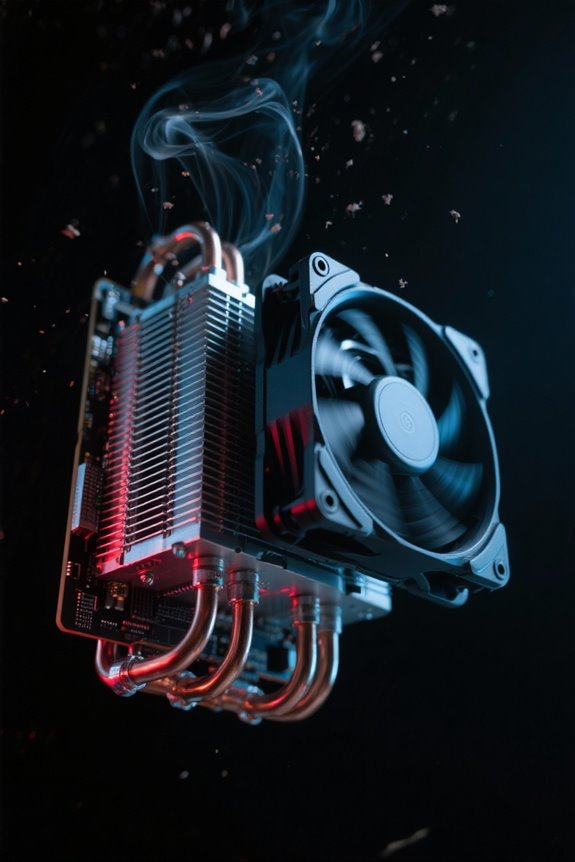
Effective airflow stands as a crucial pillar in the thermal management of electronic devices, ensuring that heat generated by components is efficiently dissipated. When temperatures exceed 120°F, the risk of failures and a diminished lifespan escalates. In enclosed spaces, electronics may operate 10 to 20 degrees hotter than ambient temperatures, thereby increasing overheating risks. To combat this, maintaining at least one inch of clearance around devices is essential, promoting necessary airflow for effective heat dissipation. Additionally, features like ventilated doors or shelves in media furniture enhance cooling efficiency by allowing hot air to escape. Modern cooling solutions like multiple fan configurations can reduce operating temperatures by up to 20 degrees Celsius during intensive use. Ultimately, adequate airflow not only safeguards investments; it also sustains peak system performance by keeping operating temperatures below 85°F, ensuring reliability and longevity.
How Dust Affects Electronic Performance
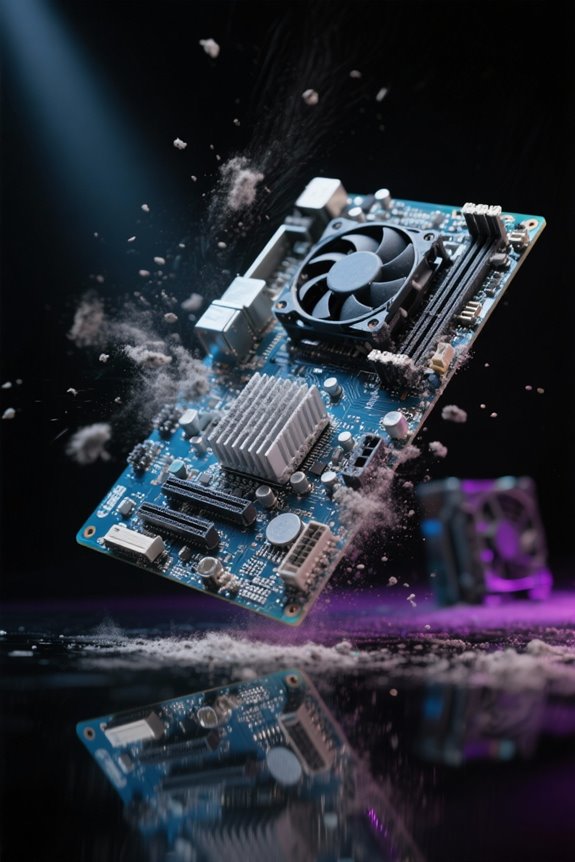
When dust infiltrates electronic devices, it compromises performance and can lead to significant operational failures. Dust accumulation obstructs airflow, diminishing the efficiency of cooling systems and elevating operating temperatures. In environments with humidity, conductive dust can induce electrical leakage and short circuits, thereby jeopardizing device reliability. Additionally, flammable dust poses fire hazards, particularly in high-power applications where heat generation exceeds safe limits. Moreover, dust acts as a dielectric material, causing signal interference that degrades performance in sensitive circuits, ultimately resulting in system malfunctions. As a result, proactive thermal management through regular maintenance and cleaning is essential, as even minimal dust build-up can severely impact thermal performance and overall device longevity. Don’t get me wrong—this maintenance is vital for avoiding costly repairs or replacements. Effective cooling stations that combine both charging and thermal management capabilities can significantly extend the lifespan of gaming consoles and controllers by preventing dust-related issues.
The Role of Thermal Resistance

While components within electronic devices generate heat during operation, thermal resistance plays a vital role in managing this heat effectively. Measured in °C/W, thermal resistance indicates the temperature rise per watt of power dissipated; lower values signify more efficient cooling solutions. The total thermal resistance from junction to ambient is essential for device performance, impacting operating temperatures and overall reliability. Notably, different semiconductor packages exhibit varying levels of thermal resistance due to design differences, which can seriously affect cooling efficiency. Additionally, thermal interface materials (TIM) can enhance thermal conduction by filling microscopic gaps between heat sources and heatsinks, effectively reducing thermal resistance. Consequently, optimizing thermal design through effective management of thermal resistance is essential to prevent overheating and prolong device lifespan. High-performance thermal pads with thermal conductivity ratings of up to 13W/mK can significantly improve heat dissipation in modern electronics.
Key Thermal Interface Materials
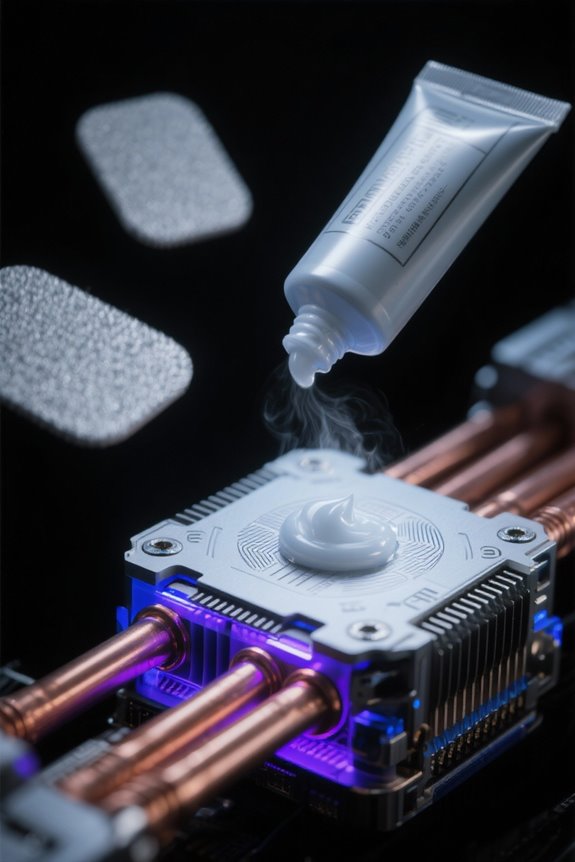
Thermal interface materials (TIM) are pivotal in ensuring efficient heat management within electronic devices, acting as the essential bridge between heat-generating components and heat sinks. By filling microscopic gaps, these materials considerably enhance thermal conductivity and reduce thermal resistance, which is critical for performance. Common TIM types include silicone-based pads, valued for their flexibility and thermal conductivity, which can reach over 5 W/m·K, and ceramic-based pads, known for high-temperature resistance. Phase change materials (PCMs) provide unique benefits by altering states at certain temperatures to aid heat dissipation. Proper selection and application of TIM are essential; they can dramatically lower junction-to-ambient thermal resistance, thereby maintaining ideal operating temperatures and preventing overheating in critical electronic applications. Similar to how gel-cooled memory foam enhances comfort in gaming headsets by managing heat, TIM materials play a crucial role in electronic component temperature regulation.
Common Cooling Methods for Electronics
Effective heat management in electronic devices is not solely reliant on the choice of thermal interface materials, but also greatly influenced by the cooling methods employed. Common cooling solutions include convective air cooling, which uses natural air movement, and forced air cooling, enhanced by fans for improved efficiency. Heat pipes function by transferring heat via phase change, effectively mitigating overheating. For applications requiring precise control, Peltier cooling plates can deliver targeted thermal management through electric current. Liquid cooling systems, often used in high-performance computing, circulate coolant to achieve considerably lower temperatures. To maximize cooling effectiveness, the integration of quality thermal interface materials guarantees ideal contact between heat sources, like CPUs and GPUs, and the chosen cooling solutions. Modern cooling fans with automatic temperature detection can adjust their speeds dynamically to maintain optimal device temperatures while minimizing noise levels.
The Significance of Proper Thermal Design
The essence of proper thermal design cannot be overstated, as it serves as an essential foundation for the reliability and performance of electronic devices. Effective thermal management guarantees that heat dissipation is optimized through careful evaluation of thermal resistance from junction to ambient. Lower thermal resistance translates to better heat transfer, particularly using thermal interface materials (TIM) to bridge semiconductor components and heat sinks. Optimizing the geometry of heat sinks via thermal simulation is vital for visualizing airflow and temperature distribution under various operational conditions. Advanced technologies like liquid cooling and heat pipes further enhance heat management in powerful systems, maintaining operational temperatures typically 10 to 20 degrees above ambient. Proper thermal design directly impacts device longevity and reliability. Modern NVMe enclosures implement thermal pad systems and aluminum cases to effectively manage high-speed operational temperatures and prevent data integrity issues.
Impact of Enclosed Spaces on Heat Dissipation
Enclosed spaces considerably impact heat dissipation, often creating conditions whereby heat accumulates around electronic components. In environments lacking proper ventilation, temperatures can soar beyond 120 degrees Fahrenheit, increasing the risk of thermal failure. For instance, media furniture designed without adequate airflow can trap hot air, diminishing passive cooling effectiveness. Consequently, electronic systems might operate 10 to 20 degrees hotter than ambient room temperatures. This elevated heat not only compromises performance but also shortens lifespan. Implementing active cooling solutions, such as fans or specialized ventilation systems, is essential in these confined setups to facilitate airflow and enhance heat dissipation. Don’t get me wrong, ensuring an ideal thermal environment is critical for maintaining electronics and preventing operational disruptions. Sound dampening blankets used for soundproofing home theaters should be carefully positioned to avoid restricting necessary airflow around electronics.
Best Practices for Dust Management
Dust management is a critical aspect of maintaining the operational efficiency of electronic devices. Regular cleaning using compressed air or non-static vacuums can reduce dust accumulation notably, enhancing airflow and facilitating effective thermal management. Implementing air filters or dust covers offers an added layer of protection for sensitive components, thereby improving overall system efficiency. Inspecting for moisture and applying coatings to prevent corrosion can mitigate dust-related issues since dust can attract humidity, potentially leading to electrical shorts. Establishing maintenance schedules for dust removal guarantees prolonged lifespan of electronic components, preventing dust from trapping heat. Additionally, designing enclosures with proper sealing and ingress protection ratings, like IP67, can effectively minimize dust contamination, especially in demanding environments. Utilizing heat-resistant materials in cable management solutions ensures dust-related thermal issues don’t compromise the safety of electrical components.
Assessing the Risks of Overheating
While many users may underestimate the impact of overheating, it is fundamental to recognize that excessive heat can lead to serious consequences for electronic devices, often resulting in permanent damage. Operational temperatures exceeding 120°F can trigger catastrophic failures, highlighting the significance of effective thermal management. Dust accumulation obstructs airflow, trapping heat and increasing the overheating risk. Efficient thermal design, including ideal component spacing and airflow strategies, is essential for compact devices. Incorporating thermal interface materials (TIM) can decrease thermal resistance, enhancing heat dissipation. Regular maintenance—such as dust removal and airflow assessments—is imperative to maintaining system reliability and preventing overheating. Ignoring these factors can compromise your electronic investments, underscoring the need for vigilance in managing thermal risks. Modern cooling solutions like intelligent temperature monitoring systems automatically adjust fan speeds to prevent dangerous heat buildup in electronic devices.
Thermal Simulation and Design Optimization
Thermal simulation serves as a crucial step in the design process for electronics, allowing engineers to analyze airflow and temperature distribution through advanced Computational Fluid Dynamics (CFD) techniques. This early verification of thermal management can identify potential overheating issues, ensuring reliable performance. By optimizing heatsink geometry and fan speeds, thermal simulations enhance cooling efficiency while effectively addressing constraints such as power, weight, and cost. For instance, advanced tools enable iterative design optimization, allowing experimentation with varying materials and configurations to minimize thermal resistance. Accurate modeling also predicts junction-to-ambient thermal resistance, a critical factor influencing overall device performance. Consequently, rigorous thermal simulation is essential for developing efficient electronic devices, ensuring that they meet performance benchmarks in their respective applications.
Equipment Maintenance for Longevity
Maintaining electronic equipment is essential for ensuring longevity and peak performance. Regular maintenance, such as scheduled cleanings with compressed air or non-static vacuums, prevents dust accumulation that leads to overheating. Remember, effective thermal management involves keeping temperatures below 120°F, minimizing irreversible damage to components. Adequate ventilation supports cooling systems, enhancing overall efficiency. Additionally, inspecting for moisture and employing protective coatings can greatly reduce corrosion risks. Investing in ruggedized electronics tailored for industrial settings—often featuring reinforced frames and moisture-resistant enclosures—can further extend lifespan. Don’t get me wrong; routine checks can mitigate for high-vibration areas, using shock absorbers to prevent loosened connections. Consequently, proper maintenance practices not only sustain performance but also safeguard your investment in technology.
Vibration and Its Effects on Electronics
Vibration frequently poses a notable threat to the integrity of electronic devices, particularly in industrial environments. The constant jostling can loosen critical connections, like wires, screws, and solder joints, leading to intermittent failures. Over time, this degradation of solder integrity can result in serious electrical failures in sensitive components. In high-vibration settings, using shock absorbers becomes essential to safeguard these systems. In addition, the combination of vibration and dust accumulation can produce stray currents, which not only lead to overheating but ultimately compromise device performance. Vibration-induced mechanical stress can greatly reduce the lifespan of capacitors and chips, making robust thermal management important for maintaining reliability. Thus, understanding these dynamics is vital for enhancing electronic longevity in demanding conditions.
Monitoring and Managing Environmental Conditions
Effective monitoring and management of environmental conditions are vital for the longevity and performance of electronic devices, especially under adverse circumstances. Ambient temperature and humidity must be regularly monitored, as temperatures exceeding 120°F can lead to catastrophic electronic failure. The integration of temperature sensors allows for real-time data assessment, enabling proactive cooling adjustments. Likewise, thermal imaging cameras can identify hot spots that necessitate targeted airflow corrections. Regular maintenance of ventilation systems is essential; dust buildup can severely obstruct airflow and amplify overheating risks. Additionally, employing climate control systems in sensitive electronics environments guarantees consistent operating conditions, considerably mitigating thermal overload risks while enhancing overall reliability. Attention to these factors can safeguard device performance and longevity.
Frequently Asked Questions
Why Do Electronics Attract so Much Dust?
Electronics attract significant dust accumulation primarily due to static electricity generated by their components. This static charge acts like a magnet, drawing in fine particles common in indoor settings, which complicates maintenance and impacts device performance.
How Do Electronics Overheat?
Electronics overheat due to inadequate heat dissipation, leading to thermal runaway. Heat buildup occurs when airflow is restricted, surfaces are obstructed by dust, or thermal management components fail to adequately transfer heat away from sensitive areas.
Can Dust Ruin Electronics?
Dust can indeed ruin electronics by causing overheating, short circuits, and performance degradation. Regular electronic maintenance and dust prevention methods are essential to safeguard devices, ensuring their longevity and reliable operation in various environments.
Why Is Thermal Management Important in Electronics?
Thermal management is essential in electronics, as 80% of device failures stem from overheating. Implementing effective heat dissipation strategies and innovative cooling solutions prevents damage, assuring ideal performance and longevity in electronic components.


