


RGB, RGBW, and RGBIC differ markedly in color accuracy and white balance. RGB illuminates vibrant colors but can appear bluish, limiting true white light production. In contrast, RGBW incorporates a dedicated white LED, achieving about 16.7 million colors with higher energy efficiency and accurate white light. RGBIC allows for individual control per LED, creating dynamic effects while enhancing white balance. This variety means you can cater your choice to specific needs and environments—keep exploring to find the best fit for you.
Key Takeaways
- RGB lighting can produce vibrant colors but often lacks true white balance, resulting in a bluish tint.
- RGBW enhances color accuracy with a dedicated white LED, providing better true white light and overall brightness.
- RGBIC allows for individual control over each LED, improving white balance and enabling complex animations without the bluish tint of standard RGB.
- RGBCCT strips offer the most flexibility with adjustable RGB colors and a range of white temperatures for varied lighting needs.
- When selecting between options, consider the balance between vibrant colors and reliable white balance for your specific application.
What Does RGB Stand For In LED Lighting?
In the vibrant world of LED lighting, RGB stands for Red, Green, and Blue, the primary colors that form the basis of the additive color mixing process. This model allows for the combination of these colors to produce approximately 16 million shades, offering extensive versatility in dynamic lighting effects. Each RGB LED chip typically contains three diodes, enabling controlled brightness to achieve varied colors. While RGB can generate white light by combining Red, Green, and Blue at full intensity, it often leans towards a bluish tint, lacking the purity found in other models like RGBW, which adds a dedicated white channel for improved color accuracy. This distinctive feature caters primarily to decorative and accent lighting applications. Similar to the RGB lighting modes found in modern PSVR2 charging stations, these systems can create engaging ambient effects through multiple color combinations.
What Is RGBIC? The RGBIC Meaning?
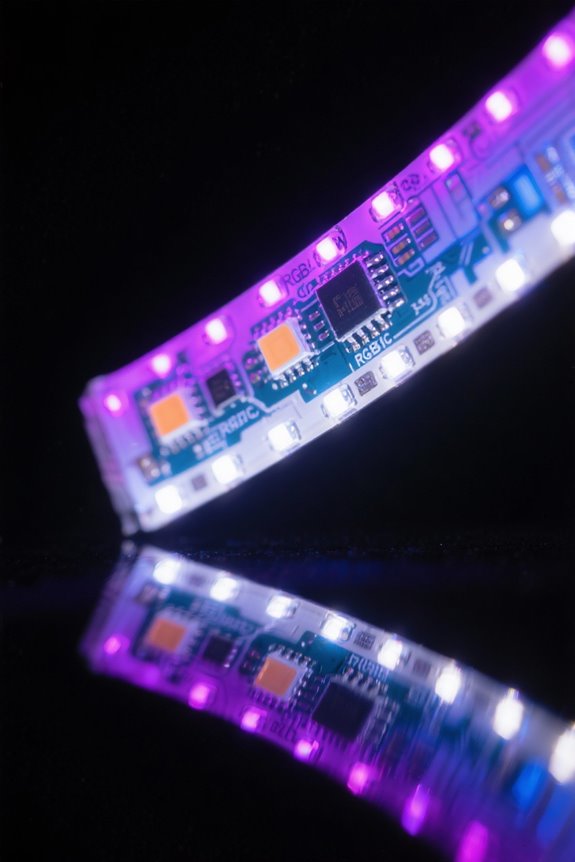
RGBIC, or “RGB with Individual Control,” represents an innovative leap in LED lighting technology. This system utilizes intelligent control chips, such as WS2812B and WS2811, allowing for dynamic color displays with independent control over each LED or segment. Unlike standard RGB systems, which show one color at a time, RGBIC strips can exhibit a spectrum of colors simultaneously, enabling fascinating effects like color chasing and gradients. These addressable RGB LEDs are particularly popular in gaming setups and home theaters for their ability to sync with music, enhancing visual experiences. However, it’s important to note that RGBIC strips generally cannot be cut randomly without risking functionality, as the integrated circuits are designed for specific segments. Similar to USB-C transfer speeds, RGBIC technology prioritizes performance and responsiveness for an enhanced user experience.
RGBIC LED Strip Light vs. Normal RGB Strip Light

When comparing RGBIC LED strip lights to standard RGB strips, the distinctions in functionality and capabilities become clear. RGBIC LED strip lights offer individual control for each LED segment, resulting in vibrant colors and intricate animations. In contrast, RGB strips only display a single color at a time, limiting their capabilities. While both can produce approximately 16 million colors, RGBIC strips shine with enhanced color accuracy and the option to add a dedicated white LED, providing true white light without the bluish tint often seen with RGB strips. This makes RGBIC lights suitable for immersive environments, though their complex installations might increase labor costs by 40%. Ultimately, RGBIC technology presents unique advantages for dynamic and versatile lighting setups. Similar to how wide color gamut enhances visual depth in gaming monitors, RGBIC strips deliver superior color richness for ambient lighting applications.
What Is RGBW? What’s RGBW Lighting?

RGBW lighting represents a significant advancement in LED technology, combining Red, Green, Blue, and an additional White LED to produce an expanded spectrum of colors and improve white light accuracy. This system allows users to enjoy vibrant color combinations while delivering true white light, vital for decorative and task lighting applications. RGBW LED strips can generate approximately 16.7 million color variations, achieving a high color rendering index (CRI), ensuring impressive color accuracy in various settings. The inclusion of a dedicated white LED enhances energy efficiency, allowing for brighter white light with lower energy consumption compared to standard RGB lighting. RGBW technology is especially beneficial in environments like retail spaces, where proper illumination and color clarity are essential for showcasing products. Similar to the RGB lighting modes found in modern PSVR2 charging stations, RGBW systems offer customizable ambiance options for enhanced visual experiences.
Addressable RGBW
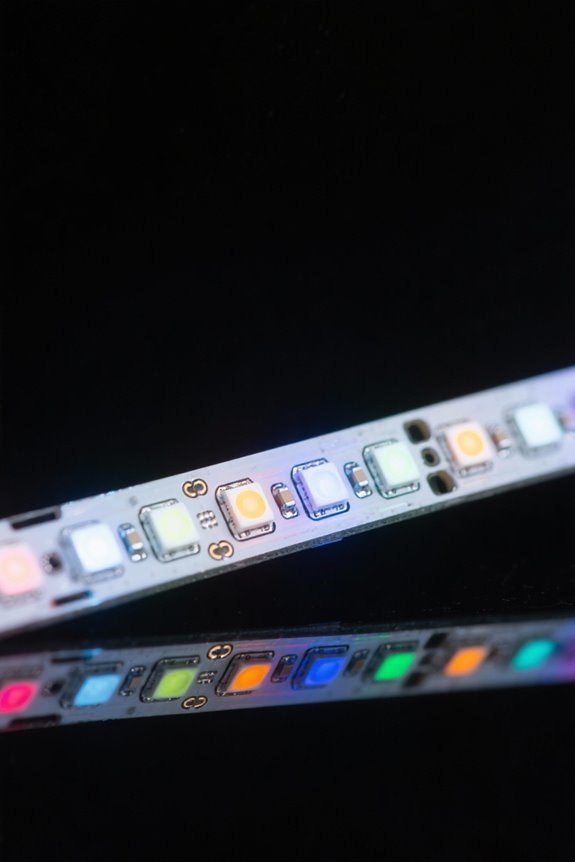
Addressable RGBW technology transforms ordinary lighting into a dynamic visual experience by offering individual control over each LED in a strip. Unlike standard RGB strips, addressable RGBW incorporates a dedicated white channel that produces true white light, free from the bluish tint that can diminish color accuracy. This capability allows users to mix shades of white, ranging from warm to cool, making it suitable for both decorative and task lighting in various settings. Smart controls enable programmable animations and synchronization with music, amplifying dynamic color effects. In addition, the individual control of each LED permits the creation of intricate lighting patterns that can elevate any environment. Addressable RGBW systems therefore provide a versatile and engaging lighting solution for all users. Similar to anti-slip silicone pads that provide stability for phone stands, RGBW strips often include protective coatings to ensure durability and longevity.
What Is RGBWW? What’s RGBWW Meaning?
In the domain of modern lighting technology, RGBWW emerges as a sophisticated solution that elevates the way users experience light. Combining Red, Green, Blue, along with two types of white LEDs—warm white and daylight white—RGBWW achieves versatile color temperatures and enhanced white light options. This addition allows for softer, more natural white light, ideal for environments needing varying warmth levels. Users benefit from dynamic color displays while enjoying higher color accuracy compared to standard RGB configurations. The flexibility of RGBWW technology supports diverse applications, from creating ambient mood lighting to meeting task lighting needs in both residential and commercial spaces. Consequently, RGBWW represents an important advancement in lighting technology, emphasizing enhanced white balance and improved color rendering. The technology pairs exceptionally well with smart control features that enable seamless adjustments through Bluetooth apps or remote controls for personalized lighting experiences.
What Is RGBCW?
Combining vibrant color options with a focus on crisp white illumination, RGBCW technology stands out in the domain of LED lighting solutions. RGBCW, which stands for Red, Green, Blue, and Cool White, enhances traditional RGBW setups, offering versatile ambient lighting options. The addition of cool white in RGBCW LED strips allows users to achieve various color temperatures while improving brightness levels and color accuracy. This makes them ideal for environments requiring both dynamic color displays and bright, clean white light for tasks. With RGBCW, achieving the perfect balance between colorful lighting effects and functional illumination becomes effortless, ensuring accurate color representation essential for applications where color distinction matters. Overall, RGBCW redefines the possibilities of LED lighting. Similar to how heat shrink tubing offers color-coded options for easy identification in electrical work, RGBCW systems provide clear visual distinctions for various lighting applications.
What Is RGBCCT?
RGBCCT technology represents a significant advancement in LED lighting design, merging the vibrancy of RGB colors with the adaptability of correlated color temperature adjustments. This system allows for an adjustable white color temperature ranging from 2700K, providing a warm light, to 6500K for a cooler appearance. By incorporating dedicated white LEDs alongside RGB elements, RGBCCT guarantees enhanced color accuracy and balanced illumination, making it ideal for various applications. Users enjoy a wide array of color options, perfect for creating dynamic lighting adjustments. It is essential to highlight that RGBCCT employs specialized addressable technology requiring specific controllers, which are not compatible with standard RGB setups. These features collectively enhance the versatility of RGBCCT lighting solutions in any environment. Similar to modern eye-care technology features found in premium desk lamps, RGBCCT systems help reduce eye strain during extended use periods.
RGBIC vs. RGB
When comparing RGBIC and RGB lighting technologies, it becomes evident that the advancements in RGBIC offer significant advantages. RGB lighting operates with three colors—Red, Green, and Blue—limiting color accuracy as it can display only one color at a time. Conversely, RGBIC LED strips feature integrated circuits, enabling individual control of each LED or segment. This allows for vibrant color patterns and dynamic lighting effects, enhancing decorative and immersive experiences. In particular, RGBIC provides superior white balance and brightness, producing a purer white light without the bluish tint common in RGB configurations. Additionally, its precise control capabilities facilitate intricate animations, setting a new benchmark in versatility and visual performance while far surpassing traditional RGB setups. Modern RGBIC systems offer 16 million colors through app-controlled customization, providing unprecedented creative flexibility for decorative lighting applications.
RGB vs. RGBW
The choice between RGB and RGBW lighting technologies can greatly impact both aesthetics and functionality in various applications. RGB utilizes Red, Green, and Blue diodes, creating vivid displays, yet it often struggles with pure white light, leaving a bluish tint. Conversely, RGBW incorporates an additional white LED chip, markedly enhancing true white light production and overall color mixing for increased color accuracy. While RGB can produce approximately 16 million colors, RGBW further expands versatility with clearer and more vibrant displays. RGB strips work well for mood lighting but lack precise color representation, whereas RGBW is tailored for environments demanding accurate colors. Additionally, the white channel in RGBW improves energy efficiency, consuming less power than mixing colors with RGB diodes. Modern smart integration capabilities allow both RGB and RGBW systems to be controlled through voice assistants like Alexa and Google Assistant for enhanced user convenience.
RGBW vs. RGBWW
In the domain of advanced lighting technologies, RGBW and RGBWW present unique advantages tailored to different lighting demands. RGBW combines Red, Green, Blue, and a dedicated white LED, enhancing color mixing and accuracy. However, RGBWW builds upon this by offering both warm white and daylight white options, facilitating adjustable color temperature for various ambient lighting needs. While RGBW typically includes one white channel, RGBWW embodies two, expanding its white hue range. This versatility makes RGBWW ideal for applications in residential or retail spaces. Additionally, RGBWW demonstrates better performance in energy efficiency, delivering richer white light output with lower power consumption, thereby enhancing the overall lighting experience while meeting diverse aesthetic requirements.
RGB vs. RGBIC vs. RGBW vs. RGBWW vs. RGBCW vs. RGBCCT
Understanding the differences between RGB, RGBW, RGBIC, RGBWW, RGBCW, and RGBCCT lighting technologies can greatly impact the choice of lighting system for various applications. RGBW enhances RGB by adding a dedicated white light, offering true white while improving color accuracy. RGBIC takes versatility to the next level by enabling individual control over each LED, creating intricate dynamic effects that engage viewers. RGBWW provides both warm and cool white options, enhancing lighting design flexibility. RGBCCT combines these features, allowing adjustments of RGB hues and white temperatures from 2700K to 6500K, making it ideal for diverse settings. Each technology offers unique advantages, catering to various needs in versatile lighting applications, emphasizing quality and aesthetic aspirations.
Is RGBW Better Than RGB?
When evaluating whether RGBW is superior to RGB, several key distinctions emerge. RGBW lighting enhances color accuracy by integrating a dedicated white channel, allowing for the production of pure white light, unlike standard RGB strips that emit a bluish tinted white. This integration enables RGBW to deliver a broader range of vibrant colors through improved color mixing capabilities. Additionally, RGBW’s white channel increases brightness and efficiency, making it ideal for applications like architectural lighting where accurate color representation is essential. For versatile lighting needs, RGBW strips effortlessly shift between colorful effects and bright, neutral white light, setting them apart as the preferred choice for those requiring both aesthetics and functional performance.
How Do I Choose Between RGB, RGBW and RGB-CCT?
How should one approach the decision-making process between RGB, RGBW, and RGB-CCT lighting options? First, consider your lighting needs. RGB strips, while vibrant, may produce a bluish tint and lack true neutral white light. If color accuracy is essential, RGBW strips with a dedicated white LED deliver better performance, producing a purer white while enhancing color fidelity. However, for maximum versatility, RGBCCT strips allow adjustments in both RGB colors and white color temperatures between 2700K and 6500K, making them ideal for varied preferences. Ultimately, for dynamic effects and intricate designs, RGBIC strips excel, thanks to their individual LED control. Selecting the right type hinges on the balance between color richness and reliable white balance suited to your environment.
Frequently Asked Questions
Is RGBIC Better Than RGBWW?
RGBIC often excels due to its advantages in color mixing and aesthetic benefits, making it suitable for dynamic home decor. User preferences frequently lean towards RGBIC for creative applications, despite its higher installation costs and energy efficiency considerations.
Can RGBIC Lights Do Warm White?
While RGBIC lights primarily excel in color mixing, achieving warm white requires adjustment of RGB channels. Users often seek RGBICW models for true warmth, enhancing RGBIC brightness levels and improving user experience through varied light diffusion techniques.
What Is Better, RGB or RGBIC?
RGBIC is better than RGB due to its flexibility in color blending and light saturation. It offers greater application variety, energy efficiency, and adjustable brightness levels, although cost considerations and installation ease may be more favorable with RGB.
Which Is Better, 5050 or 3528?
When considering 5050 versus 3528 LEDs, the former provides greater brightness, higher power consumption, and improved color rendering index, making it suitable for vivid applications. However, 3528 LEDs offer cost-effectiveness and ease of installation for decorative uses.


