


Dimming technologies like Pulse Width Modulation (PWM) and analog methods serve essential roles in LED brightness control. PWM operates by rapidly switching LEDs on and off at frequencies above 1 kHz, ensuring minimal flicker—especially significant in sensitive environments. With a 0-100% brightness range and high energy efficiency, PWM reduces thermal stress. In contrast, analog dimming often alters voltage, risking color shifts. Understanding these differences is vital for selecting the right lighting for various applications, and further insights await within the details.
Key Takeaways
- PWM dimming offers precise brightness control without color shifts, unlike analog dimming which may alter color accuracy.
- Analog dimming reduces current or voltage, often leading to inefficiencies and increased heat generation compared to PWM.
- PWM operates at high frequencies (above 1 kHz) to minimize flicker, whereas analog dimming can struggle at lower currents.
- Flicker from PWM can cause discomfort; high-frequency PWM (above 5 kHz) is generally considered flicker-free and eye-friendly.
- The application of PWM in various fields enhances energy efficiency and stabilizes color temperature, benefiting both commercial and consumer environments.
Understanding PWM Dimming
Pulse Width Modulation (PWM) dimming represents a sophisticated approach to controlling LED brightness. This technique achieves dimming by rapidly toggling the LED state on and off, with the duty cycle determining the desired brightness level; for instance, a 50% duty cycle yields 50% brightness. Operating at frequencies above 1 kHz, PWM guarantees you experience flicker-free lighting, essential in sensitive environments like photography or medical settings. Additionally, PWM preserves color accuracy and efficiency, as it regulates power delivery without altering the current flowing through the LEDs. Compared to analog dimming, PWM offers superior precision, minimizes thermal stress on components, and contributes to longer lifespans, making it a preferred choice for ideal lighting solutions that require consistent performance. Modern gaming monitors like the SAMSUNG Odyssey G9 demonstrate the benefits of PWM technology through their exceptional color accuracy and smooth visual performance across various brightness levels.
How PWM Dimming Works
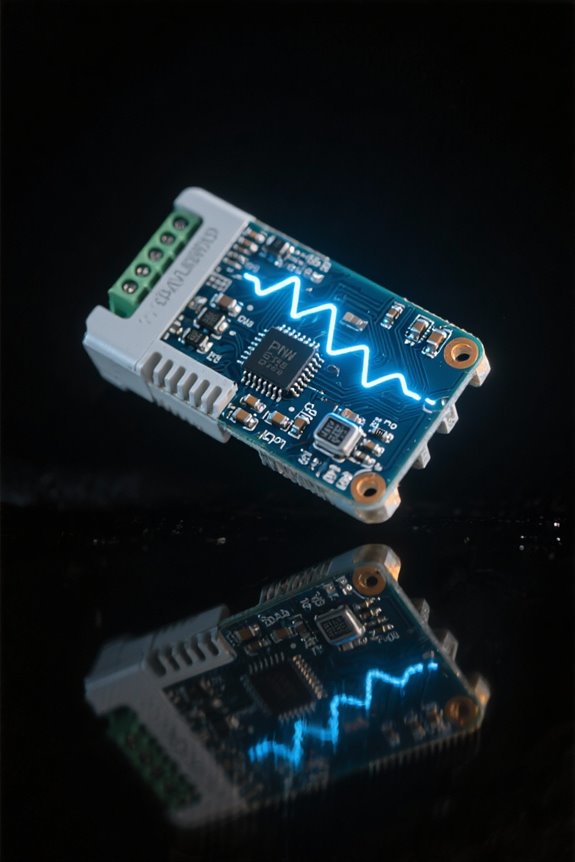
Dimming through PWM technology manifests as an efficient and effective method for controlling LED brightness in various applications. PWM dimming operates by rapidly switching LEDs on and off, with the duty cycle determining brightness control; a 50% duty cycle equates to 50% perceived brightness. Employing high-frequency switching, typically above 1 kHz, minimizes visible flicker, creating a steady light perception due to the human eye’s persistence of vision. This technique guarantees color consistency, maintaining accuracy and voltage stability compared to analog dimming, which can cause color temperature shifts. Additionally, PWM dimming enhances energy efficiency, as power loss occurs mainly during changes. However, successful implementation requires appropriate LED drivers to avoid flicker-related issues, emphasizing the necessity of quality components in the system. Similar to how screen cleaning solutions require careful application to prevent damage, PWM dimming systems need precise implementation to maintain optimal display performance and longevity.
Impact of Flicker on Eye Comfort

How does flicker influence eye comfort in lighting systems? Flicker in dimming, especially from PWM sources, can lead to eye strain and visual discomfort, impacting comfort levels in sensitive individuals. Studies reveal that prolonged exposure to lower frequency flicker may cause headaches or fatigue. The human perception of flicker varies; some can detect frequencies below 1 kHz, while others notice it at higher rates, complicating lighting applications. High-frequency PWM (above 5 kHz) is generally regarded as flicker-free, reducing the risk of discomfort. Given the variability of flicker among different light sources, selecting flicker-free certified products is essential. Stricter regulations, like IEEE 1789, are emerging to mitigate flicker’s detrimental effects on eye comfort in various contexts. Similar concerns exist with VR headsets, where breathable face pads can help reduce eye strain by minimizing lens fogging during extended use.
Comparing PWM and Analog Dimming

When evaluating lighting control systems, a clear distinction emerges between PWM and analog methods, particularly in their operational efficiencies and performance characteristics. PWM dimming operates by switching LEDs on and off, using a duty cycle to achieve precise control over brightness levels from 0-100%, without altering color temperature. In contrast, analog dimming reduces current or voltage, which may cause unwanted shifts in LED color. PWM excels in energy efficiency, generating minimal heat and supporting modern lighting systems, while analog dimming may result in substantial power loss. Additionally, PWM’s flicker management, with operating frequencies above 100 Hz, minimizes visible flicker, unlike analog dimming that often struggles at low current levels, presenting challenges for certain LED drivers. Similar to how ultra-low latency is crucial for smooth streaming experiences in capture cards, PWM’s high-frequency operation ensures seamless visual performance without disruption.
Applications of PWM Dimming in Various Fields

Applications of PWM dimming are diverse and span multiple industries, showcasing its effectiveness in enhancing lighting control. In LED strips, PWM dimming allows smooth changes and precise control over brightness while maintaining color accuracy and energy efficiency. In automotive lighting, it is particularly beneficial for dashboard illumination and adaptive headlights, providing precise control over brightness levels for improved visibility and reduced energy consumption. Commercial applications rely on PWM dimming for task lighting, ensuring ideal conditions for productivity by stabilizing color temperature. Additionally, entertainment venues use PWM dimming in stage lighting to create dynamic effects without flicker considerations that could distract audiences. Finally, smart home technology increasingly incorporates PWM dimming systems, enabling remote lighting adjustments for enhanced comfort and energy savings. Modern gaming headsets like the Valorise utilize 5ms audio latency technology to ensure perfectly synchronized lighting effects with minimal delay during gameplay.
Benefits and Drawbacks of PWM Dimming
While PWM dimming technology excels in a variety of applications, it also presents both advantages and limitations that merit careful consideration. PWM dimming allows for precise control over brightness levels through the manipulation of the duty cycle, ensuring consistent LED color across all settings, unlike analog dimming, which can shift color temperatures. With PWM frequencies operating above 1 kHz, it minimizes visible flicker, enhancing energy efficiency as it avoids heat loss typical in analog methods. However, low frequencies (below 5 kHz) may lead to eye strain for sensitive users, necessitating thoughtful PWM driver selection. Similar to modern acoustic panel technologies, PWM systems can effectively reduce unwanted effects while maintaining optimal performance levels. Ultimately, while PWM dimming offers significant benefits, careful attention to its implementation is essential to mitigating potential drawbacks.
Frequently Asked Questions
What Is the Difference Between Analog and PWM Dimming?
Analog dimming applications adjust current for light output control but risk color rendering effects and flicker perception. In contrast, PWM dimming efficiency enhances LED performance analysis, reducing energy consumption and improving user experience through consistent brightness without compatibility issues.
What Are the Disadvantages of PWM Dimming?
PWM dimming presents drawbacks including flicker sensitivity which can lead to discomfort, color shifting issues, limited compatibility with existing systems, installation challenges, increased driver complexity, and potential noise generation, complicating user experience and power efficiency.
Why Use PWM Instead of Analog?
Like choosing a well-tuned instrument, selecting PWM enhances energy efficiency and light quality while ensuring better color accuracy. It simplifies circuit complexity, minimizes heat dissipation, optimizes performance, and reduces maintenance costs, aligning with user preferences for brightness control.
What Are the Three Primary Types of Dimming?
The three primary dimming methods are Pulse Width Modulation, Analog Dimming, and TRIAC Dimming. Each offers unique advantages regarding light control, energy efficiency, and application suitability while addressing compatibility concerns and adhering to industry standards and technology advancements.


