


Motion sensor lights primarily utilize PIR and Microwave sensors, each with unique properties. PIR sensors detect movement by sensing changes in infrared radiation, ideal for spaces up to 12 meters with a 90° range. Conversely, Microwave sensors emit radar waves, covering 360° and distances exceeding 12 meters, unaffected by temperature variations. PIRs are energy-efficient, while microwave sensors can penetrate barriers, making them suitable for larger areas. Understanding these differences can guide your selection, so exploring further may prove beneficial.
Key Takeaways
- PIR sensors are more energy-efficient and cost-effective, making them ideal for indoor settings with limited detection ranges.
- Microwave sensors provide 360° coverage and can penetrate barriers, suitable for expansive outdoor areas like parking lots.
- PIR sensors operate best in temperatures between 0°C to 40°C but struggle with environmental fluctuations and reflective surfaces.
- Microwave sensors consistently detect motion regardless of temperature or obstacles, although they may generate more false alarms due to heightened sensitivity.
- For confined spaces with clear sightlines, PIR sensors excel, while microwave sensors are preferable for large, complex environments requiring constant surveillance.
Understanding PIR Sensors
Understanding PIR sensors is essential for anyone considering motion-activated lighting systems. These sensors detect motion by identifying changes in infrared radiation emitted from warm objects, primarily humans, as they move within the sensor’s field of view. Utilizing a Fresnel lens, PIR sensors divide the detection area, allowing them to trigger lights upon sensing a temperature difference between segments. Not only are PIR sensors energy-efficient, but they are also typically less expensive than alternative options. However, performance hinges on a clear line of sight, as obstacles or significant temperature fluctuations can hinder detection. Commonly employed in lighting automation, these sensors excel in controlled environments where temperature variability is minimal, making them a reliable choice for security and indoor applications. Similar to sound dampening blankets, PIR sensors are versatile enough to be installed in various environments including studios, offices, and home theaters.
Understanding Microwave Sensors
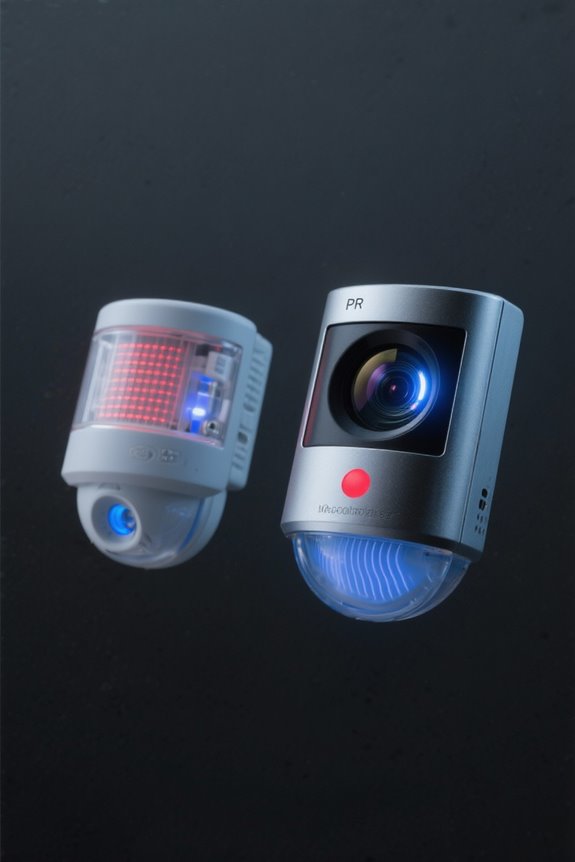
While many homeowners seek efficient lighting solutions, microwave sensors offer a sophisticated alternative to passive infrared (PIR) sensors. Utilizing active radar technology, microwave sensors continuously emit signals to detect motion based on reflected changes, providing a remarkable 360° coverage and a significant detection range. These sensors excel in motion detection, operating reliably across various ambient temperatures, unaffected by heat signatures. Their ability to penetrate walls and non-metallic materials makes them ideal for complex security systems and larger spaces. However, readers should note that microwave sensors may incur higher energy consumption due to their constant signal operation, offering a trade-off between expansive coverage and efficiency. Ultimately, they represent a forward-thinking lighting option for discerning homeowners. Similar to eye-care technology features found in modern architect lamps, microwave sensors help create comfortable lighting environments that minimize strain and glare.
Functional Differences Between PIR and Microwave Sensors
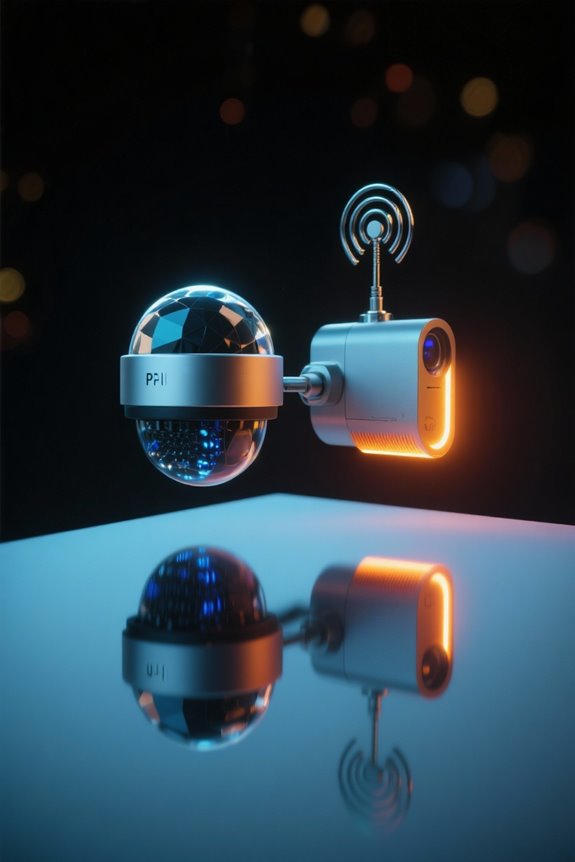
The functional differences between PIR and microwave sensors fundamentally shape their application in various lighting and security systems. PIR sensors excel in energy efficiency, utilizing infrared radiation to detect motion within a limited detection range of approximately 90°. In contrast, microwave sensors emit microwave signals, offering a 360° detection area, making them ideal for monitoring larger spaces or confined spaces where line-of-sight is obstructed. In addition, microwave sensors maintain consistent motion detection regardless of ambient temperature and can penetrate walls and non-metallic barriers, unlike PIR sensors that require unobstructed views. However, this enhanced capability typically comes at a cost of higher energy consumption. As a result, selecting between PIR and microwave sensors depends on specific needs and conditions.
Advantages of PIR Sensors
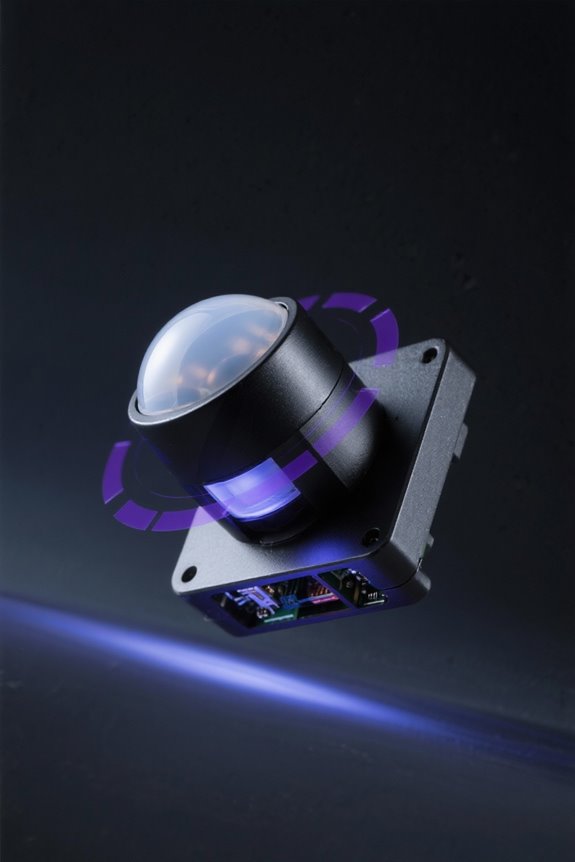
PIR sensors offer several advantages that make them a popular choice for various applications, particularly in settings requiring reliable and cost-effective motion detection. These energy-efficient devices operate passively, detecting infrared radiation without consuming continuous power. Typically, they have lower upfront costs than microwave sensors, making them budget-friendly for many users. Ideal for confined spaces, such as hallways, rooms, and entryways, PIR sensors provide effective motion detection without hassle. Furthermore, they are less prone to false alarms, as they rely on heat signatures rather than fluctuations in temperature. Additionally, installation is generally straightforward, often requiring minimal wiring and simple setup, making them accessible even for DIY projects. Similar to keyboards with 8000Hz polling rates, PIR sensors deliver exceptional response times for reliable detection. To conclude, PIR sensors deliver reliability, affordability, and efficiency in motion detection applications.
Limitations of PIR Sensors

Although well-regarded for their ease of use and affordability, limitations exist with PIR sensors that users should be aware of before installation. PIR sensors can be impacted by ambient temperature fluctuations, potentially resulting in inconsistent sensitivity. This can lead to difficulties in detecting motion, especially in extreme temperatures. Additionally, the detection range is limited, often requiring a clear line of sight and may overlook stationary heat sources. They may also struggle with rapid or direct approaches, failing to register changes in infrared radiation quickly. Environments with reflective surfaces, like glass, can obstruct their ability to detect motion efficiently. Overall, while useful, users should consider these limitations when deciding on PIR sensors for their needs. Similar to how sound dampening curtains can reduce noise by up to 10 decibels, PIR sensors typically have measurable performance limitations that should be factored into installation decisions.
Advantages of Microwave Sensors
When considering advanced detection technologies, microwave sensors stand out due to their remarkable advantages over traditional options. These sensors provide consistent detection performance in both hot and cold environments, making them reliable year-round. With 360° coverage, microwave sensors detect movement across vast areas, far surpassing the limited reach of typical PIR sensors. They excel in complex settings by detecting motion through walls and non-metallic barriers, which is invaluable for intricate installations. Operating on low-power microwave signals maintains their sensitivity to even minimal movement, ensuring effective detection. Additionally, adjustable sensitivity settings enable users to customize performance, considerably reducing false alarms. For those seeking superior detection capabilities, microwave sensors are an excellent choice, delivering reliability and versatility unmatched by traditional systems. Similar to WiFi 6 technology, these sensors maintain stable connectivity through walls and obstacles, ensuring reliable detection in challenging environments.
Limitations of Microwave Sensors
Microwave sensors, despite their advanced capabilities, come with significant limitations that warrant consideration. Remarkably, they can be overly sensitive, leading to false alarms triggered by minor movements like swaying branches or animals. These sensors can also detect movement through non-metallic barriers, causing unwanted activation in adjacent spaces. Additionally, when installed in highly reflective environments, consistent performance may suffer, creating inconsistencies in detection. While their broad coverage is advantageous, microwave sensors may experience under-sensitivity, particularly with thick glass or metallic barriers. Moreover, their high energy consumption makes them less appealing for energy-conscious applications compared to passive infrared (PIR) sensors. Similar to high-end gaming audio systems, microwave sensors require careful consideration of environmental factors for optimal performance. Therefore, careful evaluation of these limitations is essential for ideal sensor selection and installation.
Sensitivity and Detection Range Comparison
A thorough understanding of sensitivity and detection range is essential for selecting the right motion sensor for various applications. PIR sensors typically offer a detection coverage of approximately 90° and an effective range of 6-12 meters. In contrast, microwave sensors provide a more expansive 360° detection radius, often exceeding 12 meters in effective range. While PIR sensors’ sensitivity can fluctuate with ambient temperature and may struggle with direct motion detection, microwave sensors maintain consistent sensitivity, detecting motion even through barriers. However, they have a higher likelihood of false alarms due to their heightened sensitivity to minor movements. Understanding these differences can greatly influence the choice between PIR and microwave sensors for ideal functionality in specific environments. Similar to how acoustic foam panels help minimize echoes and reverberations in spaces, motion sensors play a crucial role in managing environmental responses.
Energy Efficiency of PIR Vs Microwave Sensors
The energy efficiency of motion sensor lights particularly varies between PIR and microwave sensors, impacting both operational costs and environmental considerations. PIR sensors are highly energy-efficient, activating only upon detecting heat signatures, which leads to lower energy consumption, especially in environments with prolonged inactivity. Their average power consumption is considerably lower than that of microwave sensors, which continuously emit microwave signals, resulting in higher operational sensitivity and energy draw. While microwave sensors offer broader detection coverage, they may also lead to more false alarms. Additionally, PIR sensors typically come at a lower upfront cost, making them budget-friendly solutions for energy-efficient lighting control. This efficiency is advantageous for reducing operational costs over time, appealing to both households and businesses. Similar to modern LED desk lamps that offer 60,000 hours lifespan, PIR sensor lights provide extended durability while maintaining optimal energy efficiency.
Ideal Applications for PIR Sensors
While many lighting solutions exist, PIR sensors stand out as ideal for various applications due to their energy-efficient operation and effective motion detection. These sensors thrive in indoor settings such as hallways, offices, and living rooms, particularly in confined spaces where movement needs to be monitored closely. Their detection range of 6-10 meters allows for accurate sensing, minimizing unnecessary alerts while enhancing lighting control. Frequently employed near entry points and staircases, PIR sensors act as a critical security measure, providing illumination while saving energy. However, it is important to note that they operate best within a temperature range of 0°C to 40°C, rendering them unsuitable for high-heat environments like kitchens or metal processing areas. Modern LED motion sensor lights can deliver up to 80 lumens of brightness with detection ranges extending to 16 feet, making them perfect companions for PIR sensor systems.
Ideal Applications for Microwave Sensors
As organizations increasingly seek efficient solutions for monitoring large areas, microwave sensors emerge as an exceptional choice for enhancing security and lighting applications. These sensors excel in extensive environments like parking lots and warehouses, where the ability to detect motion through walls and barriers is vital. Their 360° coverage guarantees thorough monitoring without the need for numerous installations. Additionally, microwave sensors are durable in high-temperature industrial settings, unlike some PIR counterparts that may falter. Customizable sensitivity settings help minimize false alarms from minor movements, further improving their utility in complex areas. Overall, microwave sensors provide reliable security solutions, effectively detecting intruders and enhancing safety in various applications without sacrificing performance. Similar to how UHD resolution enhances visual clarity in gaming monitors, microwave sensors deliver precise motion detection capabilities for optimal security coverage.
How to Choose the Right Sensor for Your Needs
How can one select the ideal sensor for individual needs? When evaluating options, consider the detection range required. PIR sensors are best for confined spaces, offering a 90° coverage, while microwave sensors boast a 360° detection area, ideal for expansive environments. Environmental conditions also play a critical role; PIR sensors can struggle in extreme temperatures, whereas microwave sensors excel across varying climates. If there are physical barriers, microwave sensors provide superior detection through obstacles. Regarding energy efficiency, PIR sensors are generally more effective, consuming less power. Finally, evaluate sensitivity; microwave sensors detect even subtle movements, unlike PIR sensors, which may miss stationary heat sources. Ultimately, these factors collectively guide the selection of the right motion sensor for specific applications.
Future Trends in Motion Sensor Technology
The landscape of motion sensor technology is rapidly evolving, driven by innovative features that enhance performance and user experience. The future leans towards dual-technology sensors, combining PIR and microwave technology for increased reliability. Artificial intelligence is improving adaptive sensitivity settings, effectively managing false alarms. Additionally, motion sensors are becoming more environmentally friendly through advancements in energy harvesting, utilizing solar power and kinetic energy. Seamless connectivity with smart home systems is on the rise, enhancing automation through IoT platforms. Emerging trends also showcase the use of advanced materials that maintain sensor efficacy across various environmental conditions, making them versatile for indoor and outdoor applications. This convergence of technology signifies a promising future for motion sensors, aligning functionality with user-centric design.
Frequently Asked Questions
What Is Better, PIR or Microwave Sensor?
Determining which sensor is better depends on specific needs; PIR sensors excel in cost analysis and energy efficiency, while microwave sensors offer superior detection range and application suitability, albeit with higher installation ease and maintenance requirements.
What Is the Difference Between PIR and Motion and Detection?
PIR sensors, often deemed energy-efficient titans, excel in confined spaces through infrared detection, while microwave sensors revolutionize detection technology with 360° coverage and adaptability for larger installations, making them ideal for diverse sensor applications.
What Are the Disadvantages of PIR Sensors?
PIR sensor limitations include sensitivity issues, leading to false alarm triggers due to environmental factors. Installation challenges may arise from their narrow coverage, affecting power consumption and raising cost considerations compared to alternatives with broader detection capabilities.
Do PIR Sensors Detect Heat?
PIR sensors inherently rely on heat detection for functionality. Their energy efficiency positively influences environmental impact, while technology advancements streamline installation. Key application areas include security and automation, making them suitable for diverse settings and conditions.


