


Heat shrink tubing is a protective covering for wires, available in various sizes and shrink ratios, such as 2:1, 3:1, and 4:1. These ratios indicate how much the tubing can shrink; for instance, 2:1 allows it to reduce to half its original diameter. Selecting the right size, typically 20-30% larger than the component, guarantees a proper fit. Understanding these specifications enhances performance. For more insight on ideal applications and selection tips, additional information is available.
Key Takeaways
- Heat shrink tubing sizes are defined by their diameter before shrinking, which varies based on application needs and component sizes.
- The shrink ratio indicates how much the tubing reduces in size when heated, commonly available in 2:1, 3:1, 4:1, and 6:1 ratios.
- A 2:1 shrink ratio allows tubing to shrink to half its original diameter, suitable for standard applications.
- Higher shrink ratios like 3:1 and 4:1 offer flexibility to cover irregular shapes and larger substrates effectively.
- Selecting the right size and shrink ratio ensures optimal performance, providing reliable insulation and protection against environmental factors.
What Is Heat Shrink Tubing?
Heat shrink tubing serves as an essential protective layer for electrical wiring. This versatile material provides electrical insulation for damaged or exposed wires, protecting them from dust, chemicals, moisture, and abrasion. Available in various materials like Polyolefin, PVC, PTFE, and Viton, heat shrink tubing offers unique strengths tailored to diverse applications. With numerous sizes and colors, it can come with adhesive liners for enhanced sealing. As you apply heat, the tubing contracts according to a specific shrink ratio—such as 2:1 or 3:1—allowing it to snugly wrap around wire surfaces. This application not only protects wires but also effectively organizes and secures wire terminations and connections, making it a commonly used solution in electrical projects. When working with heat shrink tubing, using anti-static wrist straps during installation helps prevent electrostatic discharge damage to sensitive electronic components.
Understanding Shrink Ratios

When selecting heat shrink tubing, understanding shrink ratios is paramount for ensuring ideal fit and protection. The shrink ratio refers to the degree of reduction in diameter and thickness as heat shrink tubing is heated. Common shrink ratios include 2:1, 3:1, and 4:1. For instance, a 2:1 shrink ratio allows the tubing to contract to half its original size, suitable for general applications. In contrast, a 3:1 shrink ratio shrinks to one-third of its original size, ideal for irregular shapes and connections. Tubing with a 4:1 shrink ratio can shrink to one-quarter of its original size, providing effective coverage around larger substrates. Higher ratios, like 6:1, enhance protection for a wider range of wire and cable diameters. Similar to cable management systems found in professional microphone boom arms, proper heat shrink application helps maintain a clean and organized workspace.
Importance of Shrink Ratios in Application
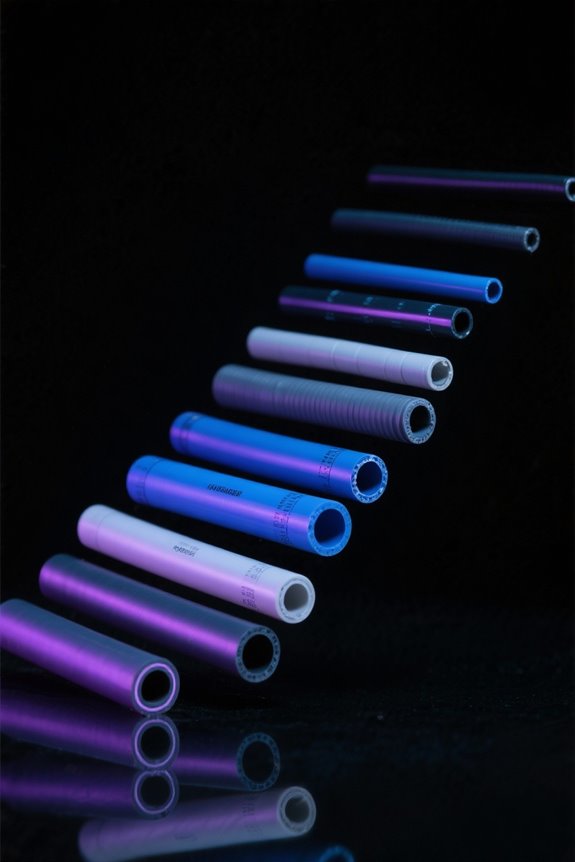
Selecting the right shrink ratio is essential for guaranteeing ideal performance in various applications involving heat shrink tubing. The shrink ratio specifies how much the tubing will contract, with common options including 2:1, 3:1, and 4:1. A higher ratio, such as 4:1 or even 6:1, is advantageous for accommodating a wider range of cable sizes without the need for multiple tubing options. Properly matching the shrink ratio to the specific application guarantees a snug fit, providing critical protection against moisture and environmental damage. Conversely, using an inadequate ratio could lead to improper coverage, risking insulation failures and exposing electrical components. As a result, understanding shrink ratios is essential for maintaining the effectiveness of heat shrink tubing. Similar to how eye care features are crucial for monitor selection, choosing the correct shrink ratio prevents long-term performance issues and ensures optimal protection.
Common Heat Shrink Ratios

Choosing the correct heat shrink ratio is essential for ensuring ideal performance across a variety of applications. Common shrink ratios include 2:1, 3:1, and 4:1. The 2:1 shrink ratio means that the tubing will reduce to half its original diameter when heated, making it suitable for many standard tasks. Moving to the 3:1 ratio, this allows the heat shrink tubing to shrink to one-third of its supplied size, accommodating slightly larger projects. For even broader applications, the 4:1 shrink ratio is utilized, shrinking to one-quarter of the original diameter and proving effective for larger substrates. Significantly, higher ratios, such as 6:1, are also available, offering adaptability for varied wire or connector sizes. Similar to split loom tubing, these solutions provide essential protection against chemical exposure and environmental factors while maintaining organized wiring systems.
2:1 Shrink Ratio Advantages and Applications

Understanding the advantages and applications of various shrink ratios is key to optimizing heat shrink tubing performance. Shrink ratios, such as 2:1, 3:1, and 4:1, considerably influence the tubing’s capacity to adapt to different wire sizes. A 2:1 shrink ratio is perfect for bundling standard-sized connections, while a 3:1 ratio is ideal for accommodating irregular shapes or larger connections. For enhanced environmental sealing, 4:1 heat shrink tubing excels in automotive applications, securely covering larger splices. Furthermore, a 6:1 shrink ratio offers the ability to protect a wider range of sizes from moisture and external factors. Utilizing the correct shrink ratio ultimately enhances the functionality and durability of heat shrink tubing in various applications. Similar to how memory foam padding provides adaptable comfort in gaming headsets, heat shrink tubing with higher ratios offers superior conformability to underlying components.
3:1 Shrink Ratio Benefits and Use Cases
Heat shrink tubing with a variety of shrink ratios provides distinct benefits and use cases that cater to specific application needs. The 2:1 shrink ratio is ideal for jacketing wire harnesses, effectively covering the material when it shrinks to half its original diameter. With a 3:1 shrink ratio, heat shrink tubing excels at adapting to irregular shapes, making it suitable for diverse wire terminations. For larger substrates, the 4:1 shrink ratio effectively seals automotive wire splices, protecting them from environmental elements. Additionally, higher ratios like 6:1 allow users to encase larger connectors while minimizing size. Choosing the right shrink ratio is essential as heat shrink tubing is used everywhere you use electrical connections, ensuring maximum insulation and durability. Fire-resistant materials are crucial for maintaining safety standards when managing cables and electrical connections in both home and office environments.
4:1 Shrink Ratio Characteristics
While the specific characteristics of shrink ratios can greatly influence the suitability of heat shrink tubing for various applications, these ratios fundamentally define how much the tubing compresses upon heating. Commonly expressed as 2:1, 3:1, or 4:1, the shrink ratio directly correlates with the reduction in diameter. A 2:1 shrink ratio indicates the tubing shrinks to half its original size, making it effective for wire harnessing. In contrast, a 3:1 ratio provides versatility needed for irregular wire and cable shapes, while a 4:1 ratio allows the tubing to compress to one-quarter of its size for substantial protection over larger substrates. Each characteristic enhances protection, ensuring durability across various applications in different environments. Similar to how 3M Dual Lock withstands temperatures up to 220F, heat shrink tubing must maintain its integrity under varying temperature conditions to provide reliable protection.
Higher Shrink Ratios: 6:1 and Beyond
When considering heat shrink tubing, higher shrink ratios like 6:1 present significant advantages for specialized applications. This ratio allows tubing to shrink to one-sixth of its original diameter, providing enhanced versatility in covering various wire diameters and irregular shapes. Typically crafted from high-quality materials, 6:1 tubing excels in extreme temperatures and harsh environments, ensuring reliable insulation. The greater shrink ratio also minimizes inventory requirements, reducing the number of different tubing sizes necessary for diverse projects. However, achieving the full shrinkage effect relies on the proper application of heat, essential for ensuring a snug fit. Don’t get me wrong; understanding these features is important for peak performance in any electrical application using heat shrink tubing. Similar to products with adhesive inner lining, these higher-ratio options provide excellent protection against moisture and corrosion in demanding environments.
Factors Affecting Shrink Ratio Performance
The performance of heat shrink tubing regarding its shrink ratio is greatly influenced by several important factors. Material properties play a central role; different materials exhibit varied thermal characteristics, which directly affect shrinkage. The manufacturing processes, including extrusion and cross-linking, can notably alter strength and shrink ratio, with cross-linking often improving durability at a potential cost to shrink efficiency. Temperature applied during the shrink process is equally essential—insufficient or excessive heat can result in incomplete shrinkage or damage, respectively. Additionally, environmental factors such as ambient temperature and humidity may modify material properties, impacting performance during installation. Consistent dimensions and quality across manufacturing batches are critical for ensuring reliable shrink performance, especially in applications where precision is paramount. Similar to how open-back design improves spatial awareness in gaming headsets, proper heat shrink application requires careful consideration of environmental factors to achieve optimal results.
Types of Heat Shrink Tubing Materials
Heat shrink tubing materials play a pivotal role in determining the performance and applicability of these products across various industries. PVC heat shrink tubing is versatile, featuring a smooth surface that suits numerous applications. In contrast, Polyolefin heat shrink tubing is celebrated for its high-temperature resistance and durability against chemical contamination, making it particularly suitable for demanding environments. For exceptional chemical resistance, PTFE heat shrink tubing (Teflon®) stands out as an ideal choice in harsh settings. Elastomeric heat shrink tubing excels in flexibility and resistance to hazardous liquids, enhancing protection when required. Finally, Viton heat shrink tubing combines low-temperature flexibility with high-temperature resistance, making it effective in applications that demand resilience across extreme conditions. Each tubing material has unique advantages, influencing shrink ratio applications effectively. Similar to high-density polyurethane used in acoustic foam panels, these materials are engineered for specific performance characteristics and safety requirements.
How to Measure for Heat Shrink Tubing Sizes
Measuring for heat shrink tubing sizes requires a systematic approach to guarantee a precise fit and ideal performance for any application. To begin, measure the diameter of the largest part of the wire, cabling, or hose using calipers for accuracy. It’s advisable to choose an initial tubing diameter that is 20-30% larger than this largest measurement. Next, assess the shrunk diameter needed, ensuring a snug fit over the smallest part of the component. The tubing’s shrink ratio is important; for example, a 2:1 ratio means it will shrink to half its original size. Consulting a Heat Shrink Size Chart can help match measurements with respective unshrunk and shrunk diameter specifications based on material type.
Selecting the Right Heat Shrink Tubing
Selecting the right heat shrink tubing can greatly impact the performance and durability of various electrical applications. When choosing, it’s essential to opt for a size that is 20-30% larger than the largest diameter of components, guaranteeing a snug fit post-shrink. A proper shrink ratio—like 2:1, which reduces the tubing to half its original diameter—affects functionality remarkably. Different tubing materials also play a role; Polyolefin provides flexibility, while Viton offers superior fluid resistance. Confirm the selected tubing accommodates the smallest component part, maintaining a maximum 40% difference between the inner diameter and the object size. For applications needing extra protection against moisture, dual wall tubing options are available, enhancing the effectiveness of heat shrink tubing in challenging environments.
Best Practices for Using Heat Shrink Tubing
When utilizing heat shrink tubing, it is crucial to adhere to best practices that enhance both installation efficiency and long-term durability. First, select tubing with a shrink ratio compatible with the diameter of the heat applied, guaranteeing it accommodates the maximum size of your wires. Measure the outer diameters using calipers, opting for tubing 20-30% larger than the largest measurement. Apply heat evenly around the tubing to optimize results, avoiding concentrated heat that can damage the tubing or wires beneath. When using dual wall tubing, confirm the adhesive layer sufficiently activates at the required temperature for effective sealing. Regularly check your stocked heat shrink tubing for a variety of sizes and shrink ratios, keeping them organized for easy access during projects.
Comparing Heat Shrink Tubing With Electrical Tape
In evaluating wire protection solutions, heat shrink tubing stands out for its durability and performance compared to traditional electrical tape. Heat shrink tubing provides superior protection against moisture and abrasion, forming a tight, insulative barrier when heated, unlike electrical tape, which may degrade over time. The versatility of heat shrink tubing is evident in its various shrink ratios, such as 2:1 and 3:1, ensuring a snug fit around different wire sizes without compromising coverage. In contrast, electrical tape lacks graded sizing options and requires manual wrapping, which may lead to inconsistencies. While electrical tape can lose adhesive properties with temperature fluctuations, heat shrink tubing maintains its integrity and effectiveness across a wide range of temperatures, offering reliable long-term protection for wires and cables.
Heat Shrink Tubing Maintenance and Removal Techniques
Maintaining the integrity of heat shrink tubing is essential for ensuring ideal performance and reliability in electrical applications. Regular inspections are vital; watch for signs of wear like cracking or peeling to guarantee ongoing protection for wires and connections. When it’s time to remove heat shrink tubing, use thin pliers to grip the end, gently twisting while pulling to prevent tearing. Sharp cutting tools, such as utility knives or scissors, can help trim tubing without jeopardizing the integrity of the underlying wires. If replacement is necessary, applying gentle heat can facilitate easier removal. Additionally, store any unused heat shrink tubing in a cool, dry environment to preserve its effectiveness for future applications and maintenance.
Frequently Asked Questions
What Does the Ratio Mean for Heat Shrink Tubing?
The ratio for heat shrink tubing signifies how much the material compresses when heated, influencing ideal applications. It impacts installation techniques, material types, and environmental considerations, enhancing heat shrink uses across diverse settings.
How to Determine Heat Shrink Tubing Size?
To determine heat shrink tubing size, one should follow tubing selection tips that factor in appropriate gauge determination, temperature considerations, project application types, and installation techniques to guarantee a secure and effective fit during usage.
What Does Shrinkage Ratio Mean?
Shrinkage ratio quantifies heat shrink tubing’s reduction in size under heat, impacting its insulation properties. Different material types and temperature considerations influence its application across various tubing requirements, ensuring effective protection for wiring and components.
What Is the 2 to 1 Shrink Ratio?
The 2:1 shrink ratio means that heat shrink tubing reduces to half its original diameter, making it suitable for diverse tubing applications. When selecting tubing, one should consider materials and common sizes for specific uses.


