


External DACs and amplifiers enhance audio quality by addressing the limitations of built-in components in devices like smartphones. DACs convert digital audio into analog signals, improving resolution and reducing noise, while amplifiers boost these signals to drive passive speakers effectively. Investing in a reputable DAC, like the Schiit Modi 3+ or the AudioQuest DragonFly Cobalt, typically priced between $100 to $200, can elevate your listening experience. Understanding these components is essential for achieving ideal sound performance. Discover the nuances further.
Key Takeaways
- External DACs are crucial when devices have inferior built-in options, enhancing sound quality and preserving audio integrity.
- Amplifiers are necessary for driving passive speakers, ensuring they receive adequate power for optimal performance.
- High-quality DACs improve resolution and reduce noise, making them essential for achieving high-fidelity sound in audio setups.
- Dedicated amplifiers are recommended for high-impedance headphones to deliver the required power for better listening experiences.
- Combining DACs and amplifiers properly enhances overall audio clarity, particularly in setups requiring complex signal processing.
Understanding the Role of DACs in Audio Systems
In the domain of audio systems, the digital-to-analog converter (DAC) serves as a critical component in achieving high-quality sound. The DAC transforms digital signals from various devices into analog audio, allowing for playback through headphones or speakers. Music lovers often seek external DACs to elevate sound quality; these units typically outperform built-in DACs, which may compromise on resolution and noise levels. High-quality DACs support high-resolution audio formats and can handle various inputs like USB and optical connections. Remarkably, features such as upsampling enhance audio processing, preserving the integrity of original recordings. Investing in a reputable external DAC can considerably improve your listening experience, ensuring that every note and tone is delivered with clarity and precision. Similar to USB-C compatibility in modern capture cards, today’s DACs offer versatile connection options to accommodate various devices and setups.
The Functionality of Amplifiers
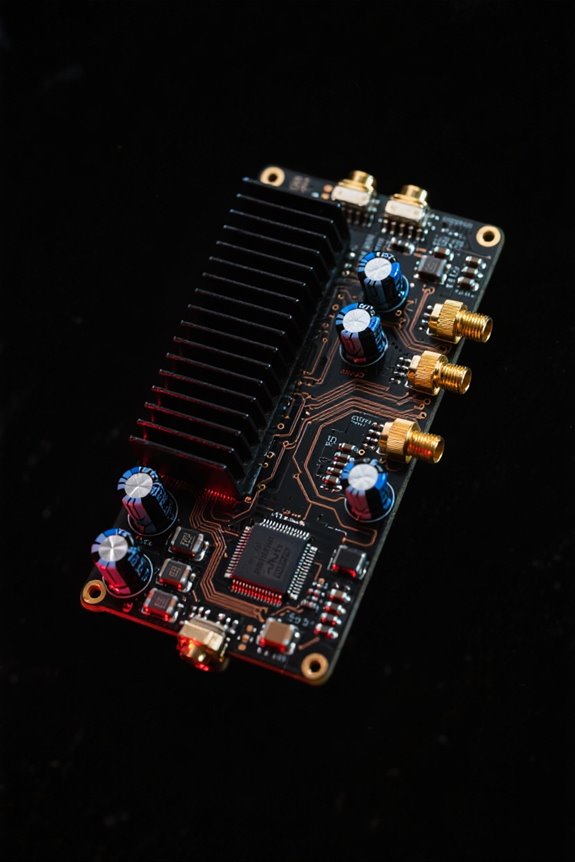
Clarity in sound reproduction hinges on the functionality of amplifiers, which play a pivotal role in audio systems. DACs convert digital audio into an analog signal, but to drive speakers or headphones effectively, amplifiers boost these low-voltage audio signals. There are two primary types: headphone amplifiers for individual listening and larger speaker amplifiers for bigger setups. Passive speakers require external amplifiers to power them, while active speakers feature built-in amplifiers for direct connection. The power output, measured in watts, is essential for matching amplifiers to the specifications of connected components; incorrect matching can lead to distortion or damage. Many amplifiers also include volume, tone, and equalization controls, allowing users to customize their listening experience effectively. Modern DAC amplifiers support high-resolution audio playback up to 24-bit/192kHz for exceptional sound quality.
Key Differences Between DACs and Amps

While both DACs and amplifiers serve essential roles in audio playback, they fulfill distinctly different functions that are critical to achieving high-quality sound reproduction. DACs, or Digital-to-Analog Converters, focus on signal conversion, changing digital music into an analog format, emphasizing factors like resolution and noise reduction. In contrast, amplifiers boost the power of these analog signals to adequately drive passive speakers or other audio transducers. Standalone DACs can enhance audio quality substantially compared to built-in variants typically found in smartphones, which often compromise fidelity for cost. While amplifiers come in various forms, such as headphone amps and speaker amps for sound systems, both components must work together effectively to meet individual audio needs, underscoring the importance of compatibility in external processing setups. Modern gaming speakers like the Edifier G2000 incorporate customizable sound modes to optimize audio processing for different scenarios like gaming, music, and movies.
When to Consider External DACs and Amps

For many audiophiles, the choice to invest in an external DAC and amplifier transforms their listening experience. External DACs become essential when dealing with devices that feature inferior built-in DACs, such as most smartphones and laptops, which often sacrifice audio quality for cost. If you’re setting up passive speakers, an external DAC enhances audio conversion, effectively minimizing noise and distortion. Furthermore, these devices typically support high-resolution audio formats, going up to 32-bit, improving overall playback quality. Users with high-impedance headphones, like 250-ohm models, benefit from pairing them with a dedicated amplifier to guarantee adequate power for maximum performance. Inconsistent power delivery or clocking errors also warrant the use of an external DAC for smoother sound reproduction. Quality DACs utilize metal-free fiber optic connections to eliminate electrical interference and ensure pristine audio transmission.
Building an Optimal Home Audio System

Building an ideal home audio system requires thoughtful consideration of each component to guarantee an exceptional listening experience. A standalone external DAC enhances sound quality by processing digital signals and minimizing noise, considerably improving frequency response. When integrating amplifiers, it’s essential they match the power requirements and impedance of your speakers for best performance. Utilizing a high-quality DAC alongside an appropriate amplifier can create clearer signal quality and a broader dynamic range in audio playback. In a typical home audio setup, the digital signal travels from the source to the external DAC, often via USB or optical, before connecting to an amplifier, ensuring superior reproduction of analog signals. Similar to how USB 3.0 technology enables rapid data transfer in external storage devices, this interface also provides reliable connectivity for digital audio transmission between components. Careful selection of these components leads to an enriching auditory environment.
Connecting Your Devices: Digital and Analog Interconnects
Connecting devices in a home audio system often involves careful selection of interconnects to guarantee ideal signal transfer. For digital connections from a source device, such as a computer or smartphone, USB is the preferred choice due to its commonality and high bitrate capacity. When longer cable runs are necessary, AES connections excel at resisting RF interference compared to S/PDIF or TosLink. Once a DAC has converted the digital signal to analog, RCA or balanced connections (XLR or 4.4mm Pentaconn) may be employed to link it to an amplifier. Single-ended analog signals typically utilize RCA cables, while balanced signals leverage XLR cables to enhance sound quality and minimize electromagnetic interference, ensuring clean audio signals are delivered to your speakers. To maintain a tidy setup and prevent signal degradation, Command Round Clips provide damage-free cable management without leaving residue on surfaces.
The Impact of Quality DACs on Sound Performance
Quality DACs greatly influence sound performance, elevating the auditory experience beyond typical listening standards. High-quality external DACs minimize clocking errors and unwanted noise, significantly enhancing audio playback accuracy and fidelity. These devices can support higher sample rates, often exceeding 192 kHz, allowing for superior dynamic range compared to built-in DACs in digital devices. Advanced components and shielding in quality settings not only reduce electronic interference but also maintain the integrity of the original audio. Additionally, the upsampling process found in high-end DACs, such as the AudioQuest DragonFly Red, boosts the sample rate and improves sound quality, resulting in smoother playback and reduced distortion. Therefore, investing in a quality external DAC can greatly elevate your listening experience. Pairing your DAC with acoustic diffuser panels can further optimize sound clarity by reducing unwanted echoes and standing waves in your listening environment.
Choosing the Right Components for Your Setup
How does one navigate the myriad of choices when selecting components for an audio setup? First, prioritize the quality of the DAC. A superior external DAC can enhance sound quality by improving resolution and reducing noise, making it an essential audio device. When considering amplifiers, acknowledge that dedicated headphone amps are ideal for low-impedance headphones, while speaker amps are vital for passive speakers needing external power. The choice between standalone DACs and DAC/amp combos revolves around space constraints and specific audio demands. Understanding connection options, such as USB for computers and optical or coaxial inputs for CD players, guarantees seamless integration of components, allowing for efficient handling of digital signals to deliver excellent music playback. Similar to anti-slip rubber bases that provide stability for desk pads, a properly configured DAC and amplifier setup ensures stable, high-quality audio performance without unwanted movement or interference.
Frequently Asked Questions
Is an External DAC Really Necessary?
An external DAC is essential for audio enthusiasts seeking unparalleled sound quality. Users note significant improvements in soundstage and signal-to-noise ratio, especially with high-resolution formats, making it superior to built-in options across various device types.
Do I Need an Audio Interface and a DAC?
Whether one needs an audio interface and a DAC depends on priorities. Audio interface advantages include recording capability and connectivity, while DAC comparison charts reveal sound quality differences. Budget audio solutions may suffice, or portable DAC options might enhance gaming audio.
How to Use a DAC for Beginners?
Using a DAC, beginners can enhance audio quality via USB connections to mobile devices, ensuring headphone compatibility. Budget options exist, along with installation tips that highlight gaming benefits and support for various digital formats, enriching the experience.
What Is the Purpose of an External DAC?
An external DAC serves to improve sound quality by optimizing digital conversion processes, enhancing audio fidelity, and ensuring equipment compatibility. Its enhanced performance elevates the listening experience, revealing musical detail through superior signal processing and reduction of noise.


