


Nylon, PET, and paracord are popular cable sleeving materials, each with unique properties. Nylon boasts a tensile strength exceeding 7,000 psi and excellent abrasion resistance, making it ideal for heavy loads. PET offers flexibility and heat resistance, while paracord is versatile but can snag easily. Prices vary, with nylon costing $0.40-$0.50 per foot and PET being the budget-friendly choice. Choosing among these options can lead to improved project outcomes, so consider your specific needs for better selections.
Key Takeaways
- Nylon offers superior tensile strength and abrasion resistance, making it ideal for heavy-duty applications and intricate designs.
- PET sleeving provides excellent heat and chemical resistance, suitable for harsh environments, particularly in automotive settings.
- Paracord’s multifunctional design is perfect for emergency preparedness, but it can be challenging to install due to snagging issues.
- Nylon sleeving is user-friendly and flexible, while PET is more rigid, potentially complicating application preferences.
- Cost-wise, PET braided sleeving is the most affordable option, while eco-friendly options like PA66 are also gaining popularity.
Strength and Durability
Strength and durability are paramount when selecting cable sleeving materials for demanding applications. Nylon fibers deliver exceptional strength, with a tensile strength rating surpassing 7,000 psi, making them highly suitable for environments experiencing heavy loads and vibrations. Both nylon and PET sleeving are known for their durability, capable of enduring wear in diverse settings, with nylon leading in abrasion resistance. Polyester sleeving, while reliable, is particularly effective under harsh conditions, such as those found in automotive engine bays. Nylon’s density effectively prevents wire insulation bleeding, ensuring ideal concealment and protection. Although PET offers commendable durability, its slightly lower abrasion resistance makes nylon the preferred choice for high-movement scenarios. To conclude, selecting the appropriate cable sleeving material is critical for performance. Modern eco-friendly materials like PET and Polyamide66 have become increasingly popular choices for ensuring both durability and environmental sustainability.
Versatility

While each type of cable sleeving comes with its own set of characteristics, versatility plays an essential role in selecting the right material for specific applications. Nylon, with its high tensile strength, excels in intricate design applications and DIY projects, allowing for flexible and pliable functional customization. PET’s flexibility makes it well-suited for outdoor environments, effectively adapting to various conditions like solar and marine use. Paracord stands out in creative projects with its internal rope structure, offering multifunctional crafting options, though it has limitations in certain applications. Each material’s unique properties provide distinct advantages, so choosing the right one can greatly enhance both performance and aesthetic outcomes in any project or installation. The durability of these materials rivals that of eco-friendly PA66 used in premium cable management clips, ensuring long-lasting organization solutions.
Practical Applications

Cable sleeving materials demonstrate a range of practical applications tailored to specific environments and needs. Nylon is renowned for its exceptional strength and durability, making it a prime choice for industrial applications involving heavy loads, such as automotive and robotics. In contrast, PET sleeving provides excellent heat and chemical resistance, maintaining integrity even under extreme temperatures—ideal for areas exposed to oils and fuels. Paracord, famed for its unraveled internal rope structure, serves essential functions in emergency preparedness, making it invaluable during outdoor activities. Its versatility allows easy installation over uneven cables. Users should select their material based on unique project demands, balancing functionality with application requirements to guarantee peak performance and longevity in their specific contexts. Proper heat-resistant materials are crucial when organizing cables near power strips to prevent safety hazards and maintain optimal performance.
Aesthetic Options

When considering aesthetic options for cable sleeving, various materials offer distinct advantages that cater to both functionality and visual appeal. Nylon sleeving, known for its exceptional color vibrancy and intricate patterns, becomes a favorite for aesthetic projects. Meanwhile, PET sleeving, despite its wide range of colors, struggles with light transmission that can affect visual appeal. Paracord excels in design creativity, offering customizable colors and patterns, though it can lack the neatness of other options. MDPC-X sleeving shines with its high UV reaction, ensuring bright and enchanting finishes. On the other hand, Furryletters Clean Cut sleeving combines texture contrast with dense weaves, resulting in an elegant appearance while effectively concealing wires. Each material brings unique attributes to enhance your project’s aesthetic. Cable management solutions can significantly improve workspace focus and efficiency while maintaining a clean, professional appearance.
Ease of Use
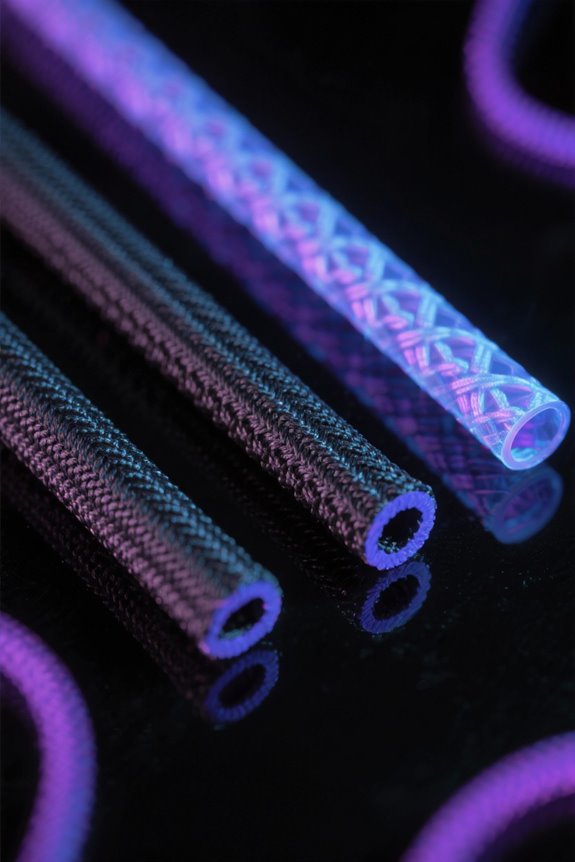
How straightforward is the installation process with various cable sleeving materials? Nylon sleeving stands out for its excellent flexibility, allowing easy application over uneven or bulky cables, enhancing installation techniques. In contrast, PET sleeving, while durable and UV-resistant, is slightly more rigid, complicating matters for some user preferences. Paracord poses significant challenges for installation, often snagging and developing bothersome strands, which can hinder thorough setups. Conversely, MDPC-X sleeving is user-friendly, sliding smoothly over wires and minimizing snags, improving the overall experience. Moreover, Furryletters Clean Cut sleeving, with its wider diameter compared to Kobra, eases usage and maintenance considerations, ultimately leading to greater user satisfaction. Mastering these nuances can make a significant difference in achieving effective cable management. Similar to how Samsung Odyssey G3 weighs 9.7 pounds for easier setup and handling, choosing the right cable sleeving material can significantly impact installation convenience.
Cost and Availability
Cost and availability dictate choices in cable sleeving materials, presenting significant considerations for users looking to optimize their setups. PET braided sleeving stands out as the most cost-effective option, often favored by budget-conscious consumers; its manufacturing processes allow for widespread availability. In contrast, nylon sleeving’s higher price—approximately $0.50 per foot for Kobra and $0.40 for MDPC-X—reflects superior attributes like abrasion resistance. Although Furryletters Clean Cut offers competitive pricing at $0.22 per foot, price fluctuations can impact purchasing decisions. Meanwhile, paracord lacks versatility and is less readily available. When weighing environmental impact, user preferences may shift, particularly as awareness of sustainable practices increases in cable management solutions. Modern cable management solutions can benefit from FSC certified wood materials that offer both durability and eco-friendly advantages. Buyers should carefully consider their needs before choosing a sleeving solution.
Frequently Asked Questions
Are Nylon and Paracord the Same?
Nylon and Paracord are not the same; nylon applications span various industries, while Paracord strength is specifically tailored for survival use. The material differences highlight their unique functionalities, emphasizing that each serves distinct purposes effectively.
Is a Nylon Braided Cable Better?
A nylon braided cable offers superior durability compared to non-braided alternatives. The benefits of nylon include enhanced abrasion resistance and flexibility, making it a preferred option for high-friction applications where robust performance is essential.
For What Purpose May Nylon Cable Be Used?
Is there a limit to what nylon can endure? Nylon applications span automotive to robotics, showcasing impressive durability and remarkable flexibility, making it an ideal choice for various demanding environments requiring reliable cable management and protection.
What Is Pet Braided Sleeving?
PET braided sleeving is a lightweight, flexible material renowned for its temperature resistance and UV stabilization. Its braiding techniques provide excellent cable protection benefits, showcasing superior durability against chemical exposure compared to other commonly used sleeving materials.


