


Acoustic foam panels are essential for sound absorption, designed to minimize echoes and improve internal acoustics in spaces such as recording studios. These panels, typically featuring a Noise Reduction Coefficient (NRC) as high as 0.95, absorb up to 95% of sound waves. Conversely, soundproofing aims to block noise transmission using dense materials and structural adjustments, thereby safeguarding your environment from external sounds. Understanding these distinctions will enhance your space effectively, and more insights await.
Key Takeaways
- Acoustic foam panels primarily focus on sound absorption to reduce echo and improve internal acoustics.
- Sound absorption enhances sound quality, while soundproofing aims to block external noise and prevent sound transmission.
- Acoustic foam is cost-effective and easier to install compared to dense soundproofing materials.
- Optimizing acoustic performance involves strategically placing foam panels to cover at least 20% of wall surfaces.
- While absorbing high frequencies, acoustic foam panels do not offer the same level of isolation as soundproofing solutions.
Understanding Acoustic Foam Panels
When considering the acoustics of a room, it is essential to recognize the role of acoustic foam panels, which are crafted from soft, porous materials specifically designed to absorb sound waves and minimize echo. These panels excel in sound absorption, particularly for high-frequency sounds, making them ideal for environments such as recording studios or smaller performance spaces. Unlike soundproofing materials, acoustic foam does not block sound from entering or exiting a room; instead, its primary function is to improve internal acoustics. Available in various shapes and colors, these panels offer both functional sound management and aesthetic appeal. The thickness and density of the foam can greatly influence its absorption capabilities, with thicker options better controlling mid-range frequencies. Most panels are manufactured using high-density polyurethane foam that meets strict fire safety standards for enhanced safety and durability.
The Role of Sound Absorption

Sound absorption plays a pivotal role in optimizing acoustic environments, particularly in spaces designed for precise auditory experiences. Acoustic foam panels are integral in this process, effectively trapping sound waves to reduce echoes and improve acoustic quality. By converting sound wave energy into heat through their porous structure, these panels enhance speech clarity in settings such as recording studios and conference rooms. Acoustic foam is especially efficient at absorbing higher frequency sounds, making it essential for mitigating sharp noises that can distract listeners. The strategic placement of sound-absorbing panels can considerably improve overall acoustic performance, creating environments that foster better communication and focused work without the added issue of sound transmission between spaces. Quality acoustic panels typically achieve a NRC of 0.9, indicating superior sound absorption capabilities for professional audio environments.
How Sound Absorption Works

Acoustic foam panels are remarkably effective in the domain of sound absorption, functioning primarily through their unique structures that capture and dissipate sound waves. These panels utilize soft, porous materials to trap sound within their microscopic openings, effectively reducing echo and reverberation in a space. As sound waves penetrate the foam, their energy transforms into heat, diminishing the intensity of sound reflections. Acoustic foam excels at absorbing high-frequency sounds, which is essential for optimal sound quality in settings like recording studios and home theaters. The efficacy of these materials is often indicated by their Noise Reduction Coefficient (NRC); higher NRC values signify enhanced sound absorption capacity. Proper placement guarantees even coverage, maximizing the benefits while addressing acoustic challenges effectively. Unlike standard building materials, acoustic foam panels are specifically engineered to manage sound waves through specialized designs like wedges and egg crate patterns.
Benefits of Using Acoustic Foam
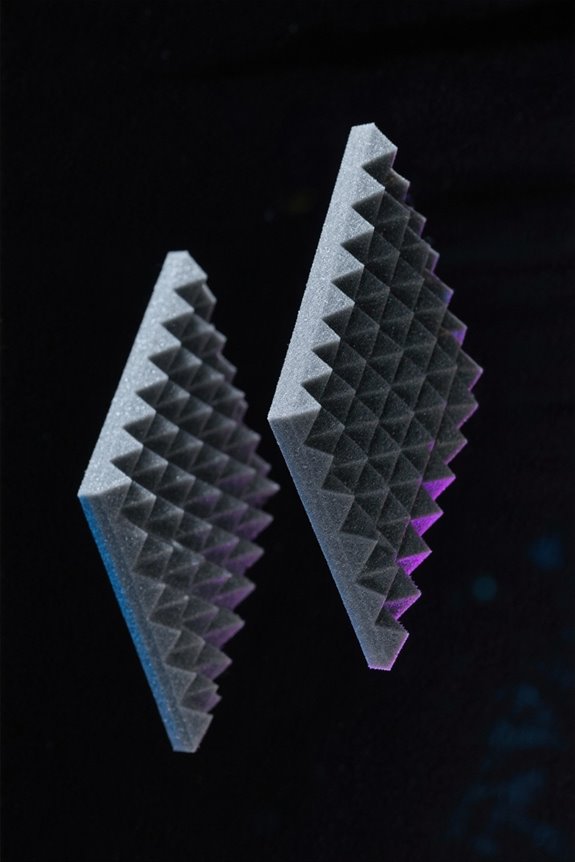
Enhancing sound quality in various environments comes with several advantages, particularly when using acoustic foam panels. These lightweight and manageable materials effectively absorb high-frequency sounds, promoting echo reduction, especially in spaces like recording studios or personal offices. Their customizable shapes and sizes allow users to target specific acoustic needs, adapting to the unique dimensions of any area. By improving sound absorption, acoustic foam contributes to clearer sound quality, greatly enhancing auditory experiences where clarity is paramount. Additionally, this solution is an affordable alternative to other sound treatment options, providing budget-conscious individuals with an economical means to optimize acoustics without incurring substantial costs. Overall, acoustic foam presents a pragmatic choice for enhancing auditory environments effectively. For optimal soundproofing results, combining acoustic foam with acoustic sealant applications can achieve superior Sound Transmission Class ratings above 60.
Difference Between Sound Absorption and Soundproofing
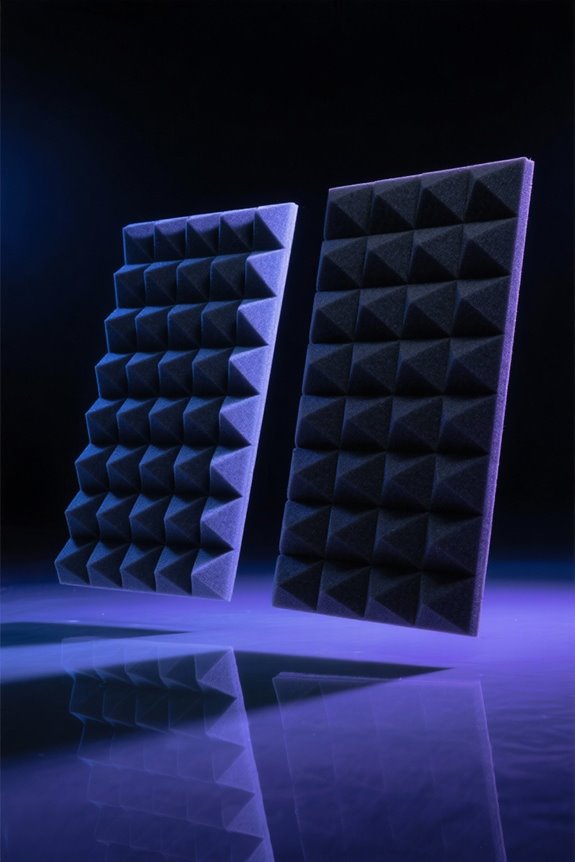
In the domain of acoustics, understanding the distinctions between sound absorption and soundproofing can greatly impact design choices for various environments. Sound absorption primarily focuses on reducing echo and reverberation by utilizing porous materials like acoustic panels, which convert sound wave energy into heat. This treatment enhances internal acoustic quality, ideal for concert halls or recording studios. On the other hand, soundproofing is aimed at achieving noise isolation, utilizing dense materials to block sound transmission between spaces, which is essential in conference rooms or similar settings. Effective soundproofing often involves structural adjustments, such as sealing gaps or adding layers of drywall, while sound absorption solutions are typically easier and more cost-effective to implement. Understanding these differences can guide effective design. Quality acoustic panels with a Noise Reduction Coefficient of 0.95 can absorb up to 95% of echoes, making them highly effective for sound absorption purposes.
What Is Soundproofing?
Soundproofing represents a vital technique in acoustical engineering, designed to mitigate sound transmission between spaces. This method employs dense materials to create effective barriers against unwanted noise, addressing issues like noise pollution. Commonly seen in environments such as recording studios and conference rooms, soundproofing often involves enhancing construction with additional mass in walls, ceilings, and floors. Sealing gaps and cracks is essential to prevent sound leakages. Techniques like building a room within a room and incorporating specialized soundproof doors enhance sound isolation where confidentiality is paramount. While soundproofing can greatly reduce sound transmission, achieving complete sound isolation remains a challenge that may require multiple strategies to target various frequencies and types of noise effectively. Professional soundproofing compounds like Green Glue damping solutions can dissipate up to 90% of noise, particularly effective against low-frequency sounds.
Mechanisms of Soundproofing
Creating effective soundproofing requires a clear understanding of the underlying mechanisms that facilitate sound isolation. Soundproofing relies on using dense materials to block sound waves, effectively creating barriers that reduce sound transmission. Techniques such as adding mass to walls, sealing gaps around windows and doors, and installing floating floors enhance noise control. The principle hinges on the idea that increasing material density is crucial for blocking sound waves. For best results, specialized methods—like constructing a “room within a room” or using double layers of drywall—may be necessary. Importantly, addressing airflow solutions can maintain ventilation and prevent compromised soundproofing effectiveness. Remember, achieving superior sound absorption and isolation is a multifaceted endeavor requiring careful implementation. Products like mass loaded vinyl can achieve an STC rating of 32 while effectively blocking airborne sound transmission through walls and ceilings.
Situations for Applying Soundproofing
How can effective soundproofing enhance various environments? In recording studios, soundproofing is essential to maintain sound quality and reduce outside interference, ensuring clear audio during recording sessions. Similarly, in shared living spaces such as apartments, it mitigates noise transfer between units, promoting resident privacy and comfort. Commercial buildings and high-traffic areas also benefit from soundproofing techniques, effectively blocking disruptive outside sounds, such as construction or street noise. Employing solutions like mass-heavy doors and sound-blocking walls, occupants experience noticeable reductions in disturbances. In addition, confidentiality in environments like conference rooms and medical facilities is vital; soundproofing prevents sensitive information from being overheard. Recycled cotton materials provide excellent sound absorption properties when used in soundproofing solutions. Overall, effective soundproofing creates peaceful, focused environments across diverse applications.
When to Use Acoustic Foam vs. Soundproofing
Choosing between acoustic foam and soundproofing materials requires understanding the specific needs of the environment. Acoustic foam excels in smaller spaces, particularly recording studios or personal offices, where it can markedly improve sound quality by absorbing high frequencies, thereby reducing echo and reverberation. Conversely, soundproofing is more effective in shared living spaces or commercial areas, as it aims to prevent sound from entering or escaping altogether. For example, dense materials or structural modifications are necessary in drumming studios for complete isolation. If aesthetic flexibility is a consideration, acoustic foam often provides an appealing alternative, offering easier installation and lower costs while still enhancing acoustic performance. Prioritize these factors to determine which solution best meets your sound management needs. Modern acoustic panels feature high-density polyester fiber construction that provides both durability and eco-friendly benefits for sustainable sound management.
Enhancing Your Space With Effective Acoustic Solutions
While many assume that achieving ideal sound quality is exclusively reserved for professional studios, it is entirely possible to enhance the acoustic properties of any space using effective acoustic solutions, such as acoustic foam panels. These panels excel at sound absorption, reducing echo and improving sound quality, making them suitable for various environments—from home offices to small recording studios. Opting for thicker panels often provides better absorption of lower frequencies, while lighter, thinner options tackle higher ones. To maximize effectiveness, you’ll want to cover at least 20% of your wall surface area with acoustic foam. Remember, unlike soundproofing options, these panels won’t block sound transmission; they merely transform sound energy into heat, optimizing your auditory experience. Similar to how cable management clips help organize and secure wires effectively against surfaces, proper placement and adhesion of acoustic panels is crucial for optimal performance.
Frequently Asked Questions
What Is the Difference Between Soundproofing and Sound Absorption?
Soundproofing and sound absorption differ markedly; soundproofing prevents sound transmission using dense materials, while sound absorption reduces echo with porous materials. Installation methods, material effectiveness, and application areas influence their respective noise reduction capabilities and product comparisons.
Do Acoustic Foams Absorb Sound?
Acoustic foams effectively absorb sound, providing noise reduction through strategic acoustic treatments. Room acoustics improve with proper foam density, and installation tips include ideal placement and coverage for maximum sound absorption efficiency.
What Is the Difference Between Soundproofing and Acoustic Panels?
Soundproofing materials block sound transmission, employing various soundproofing techniques, while acoustic treatments like panels enhance room acoustics through noise reduction. The latter also offers aesthetic benefits, seamlessly integrating with interior design without structural alterations.
What Are the Disadvantages of Acoustic Foam Panels?
“Don’t judge a book by its cover.” Acoustic foam panels face disadvantages in durability, installation challenges, cost considerations, aesthetic impact, and maintenance requirements, while their effectiveness limitations can lead to misconceptions regarding overall soundproofing performance.


