


Cable management systems, essential for organizing electrical wiring, include raceways, trays, and clips. Raceways offer enclosed conduits for dust and moisture protection, while trays support heavier cables and enhance air circulation. Cable ties provide a cost-effective bundling option but may damage insulation if over-tightened. Each solution has specific advantages and disadvantages, such as airflow limitations and installation ease. Selecting the right system depends on environmental conditions, cable types, and safety standards, leading to informed decisions for effective management. More insights await.
Key Takeaways
- Cable trays support large volumes of cables with ventilation benefits, available in ladder, ventilated, and channel styles for various installations.
- Cable raceways provide enclosed conduits for cable organization and protection, offering a clean aesthetic but potentially restricting airflow.
- Cable clips are economical fastening tools for bundling smaller cables but may damage insulation if overtightened and create waste.
- Proper cable management improves safety, efficiency, and ease of maintenance, considering cable volume, installation space, and environmental conditions.
- Best practices include labeling, separating power and data cables, spacing in trays for airflow, and using temporary solutions for flexibility.
Understanding Cable Management Systems
Understanding cable management systems is essential for maintaining safety and efficiency in various settings, especially when one considers the intricate dance of modern electrical wiring. Systems like raceways, typically enclosed channels, offer physical protection and an organized appearance by concealing cables, making them suitable for light-duty applications. In contrast, cable trays feature an open framework that accommodates heavy-duty cables, promoting excellent ventilation and simplifying maintenance within data centers or industrial environments. Cable clips, while economical and easy to install, are best for small groups of cables, though they provide limited environmental protection. Selecting the right system hinges on factors such as cable volume, environment, and adherence to safety standards like the National Electrical Code (NEC). When using adhesive cable clips specifically, surface preparation techniques significantly impact their performance and longevity, with proper cleaning ensuring optimal adhesion and residue-free removal.
Types of Cable Management Solutions
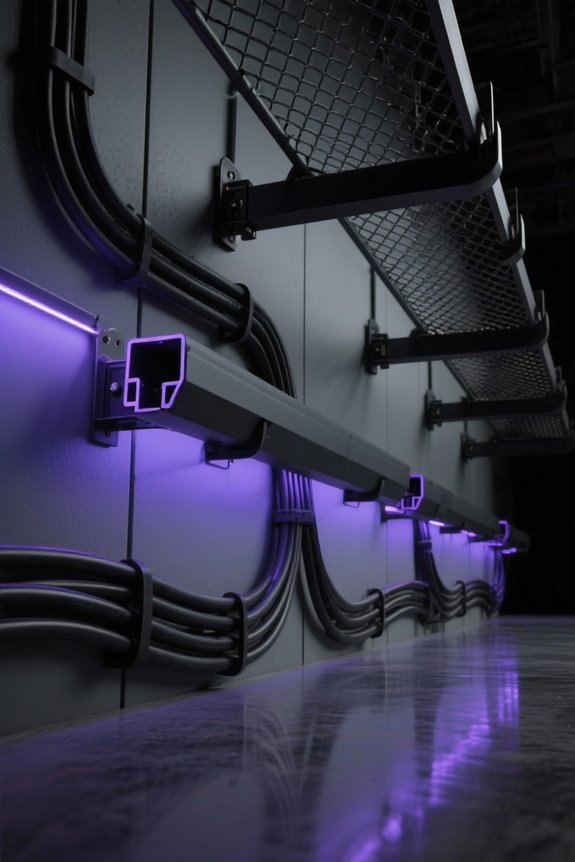
The landscape of cable management solutions encompasses a variety of systems tailored to meet diverse operational needs. Cable trays, commonly made of steel or fiberglass, are ideal for industrial applications, adeptly managing heavy-duty cables and supporting complex setups while guaranteeing ventilation. In contrast, raceways offer an enclosed route for lighter wires, often used in residential and commercial environments, providing crucial protection against dust and moisture while achieving effective cable concealment. Additionally, cable ties serve as versatile fastening tools for bundling smaller groups of cables, though they lack the extensive protection offered by trays or raceways. When choosing a solution, it is essential to assess factors like cable volume, environmental conditions, installation space, and future scalability to guarantee peak performance. Modern sleeve solutions featuring thermos-table polyethylene materials provide enhanced durability and protection while maintaining flexibility for various cable management needs.
What Are Cable Trays?
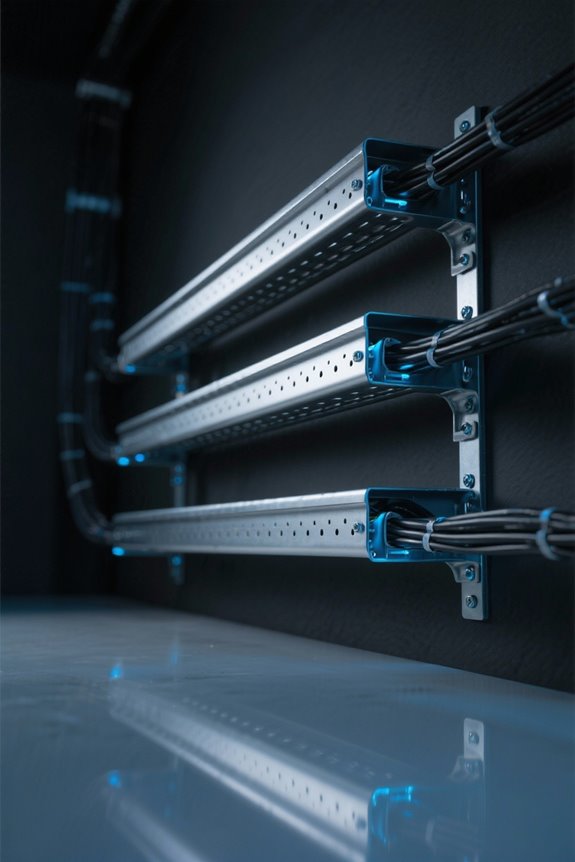
A multitude of industries rely heavily on cable trays for effective cable management, making them essential components in electrical installations. Designed to support large volumes of cables, cable trays are available in various types such as ladder, ventilated, and channel trays, each suited for specific industrial and commercial applications. Their open design enhances air circulation, notably reducing the risk of overheating, especially in high-capacity installations. Typically sized from 200×100 mm to 600×200 mm, they accommodate diverse cable sizes and configurations efficiently. While constructed from materials like galvanized steel or aluminum, some models utilize flexible plastic for ease of installation. However, potential vulnerabilities to physical damage should be considered during installation and maintenance planning. Modern under-desk cable trays often feature powder-coated steel construction for enhanced durability and corrosion resistance while maintaining a sleek appearance.
Advantages and Disadvantages of Cable Trays
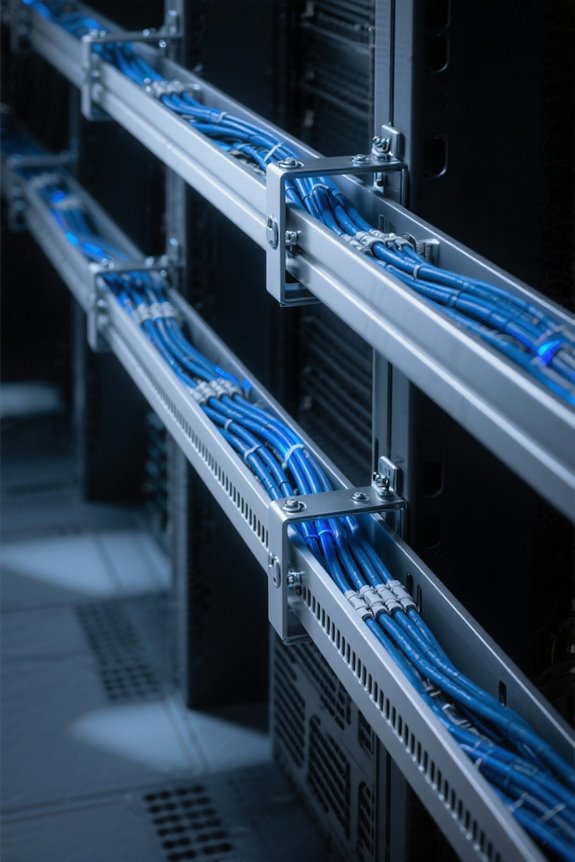
Opting for cable trays can greatly enhance an electrical installation’s efficiency, especially in environments congested with cabling, such as data centers and manufacturing facilities. These cable management solutions feature an open structure, promoting ventilation to reduce overheating risks. They facilitate easy additions and removals, offering future flexibility in industrial setups. While installation methods may involve higher initial costs, their durability can lead to long-term savings in maintenance. Cable trays can also span longer distances and support heavier loads compared to alternatives, making them robust for extensive wiring. However, their exposed nature makes them vulnerable to mechanical and chemical damage, underlining the necessity of using high fire-resistant cables for adequate protection from dust and compliance with regulations. Similar to how high-strength carbon steel provides stability in racing wheel stands, this material is often preferred for cable trays in industrial applications.
What Are Cable Raceways?
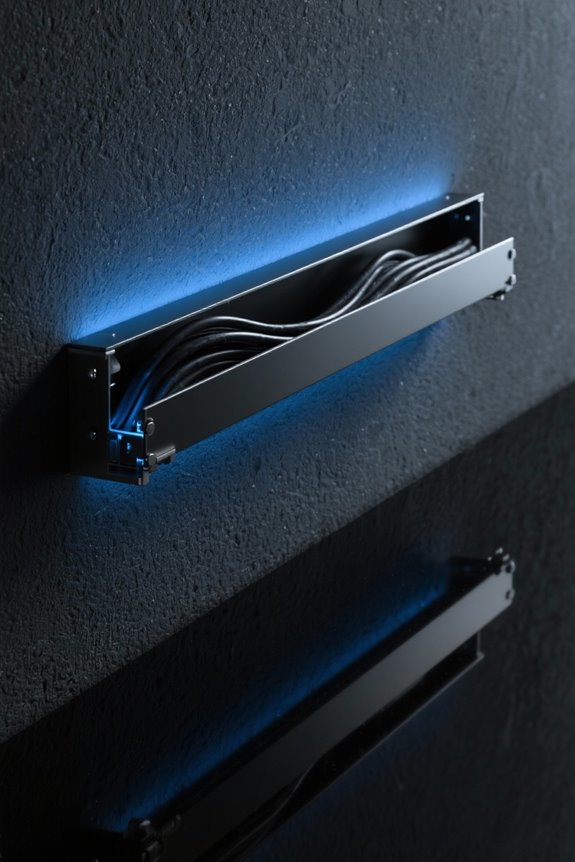
Cable raceways serve as essential conduits for the organization and protection of electrical wiring, particularly in settings that demand cleanliness and safety. These enclosed channels effectively protect electrical cables from dust, moisture, and physical damage, making them a superior choice for both commercial and residential environments. Constructed from materials like thin steel, aluminum, and flame-retardant plastic, cable raceways offer durability and a complete enclosure to reduce tripping hazards. Installation is straightforward; they can be mounted using screws or adhesive, allowing for a DIY-friendly experience. While they provide a neat appearance and organized space for wiring, it is crucial to recognize that cable raceways may limit airflow compared to alternatives, which can be a consideration in high-heat situations. For enhanced safety and organization, many users complement raceways with cable organizer boxes that feature ventilation openings to prevent overheating of power strips and chargers.
Pros and Cons of Using Raceways
When evaluating the pros and cons of using raceways for cable management, it is essential to recognize their effectiveness in protecting electrical wires. Raceways offer superior protection against dust, moisture, and physical damage, making them ideal for safety-prioritized environments. Their enclosed design promotes a clean, organized aesthetic in residential or commercial spaces. However, it’s crucial to acknowledge that raceways tend to be more expensive than alternatives like cable ties and trays, which can impact your budget. Additionally, while they facilitate easier installation and modifications, their enclosed nature can restrict airflow, potentially causing overheating in specific applications. Similar to how modern PS5 charging stations incorporate intelligent charging chips to prevent electrical issues, raceways can be equipped with protective features to ensure safe wire management. Weighing these factors carefully will help determine if raceways meet your cable management needs effectively.
Role of Cable Ties in Cable Management
Although often underestimated, cable ties play an essential role in effective cable management, particularly in environments where space is limited. These versatile fasteners enable users to manage cables efficiently by bundling and securing them, which is especially useful in low-volume installations. With various types available—locking ties, releasable ties, and flexible zip ties—these devices accommodate diverse needs. Installation is straightforward, often requiring minimal tools, making them a cost-effective solution. However, users must exercise caution during installation, as overtightening can damage insulation. Cable ties can be integrated with wire mesh systems, enhancing organization further. Despite their simplicity, cable ties remain a foundational element in the domain of cable management, offering a reliable method to secure cables effectively. Like modern PA66 nylon clips, cable ties provide durability and heat resistance while maintaining eco-friendly properties.
Benefits and Drawbacks of Cable Ties
Efficient cable management is not solely reliant on cable ties; a careful evaluation of their benefits and drawbacks reveals a complex tool best suited for specific applications. Cable ties are cost-effective, widely available, and easy to use, enabling the quick bundling of groups of cables. They facilitate easy access for cables, but overtightening can damage wire insulation, risking electrical safety. While they provide a protective, space-saving solution, the need to cut them for removal leads to material waste, negating the prospect of reusable ties. Additionally, they excel in low-volume bundling tasks in confined spaces but lack the structural support found in other cable management methods. Ultimately, cable ties serve essential, yet specific, functions in cable management systems. Modern alternatives like eco-friendly materials such as PET and Polyamide66 offer more sustainable and durable solutions for long-term cable organization.
Choosing the Right Cable Management Solution
How does one select the most effective cable management solution for their specific needs? Key considerations include the size and strength of the cables involved, confirming that any chosen system can adequately support current and future cable runs. Solutions like enclosed channels can provide both protection and organization, while the flexibility in design allows for bends and elevation changes in dynamic work environments. It’s also critical to assess the costs associated with initial installation and potential maintenance or replacement. Additionally, thorough evaluation of environmental conditions confirms longevity, while compliance with industry standards, particularly Article 392 of the NEC, guarantees safety and legality. The ability to easily add or remove cables further enhances the functionality of the management system. Similar to modern USB-C multiport adapters, proper cable management solutions should prioritize efficient data transfer while maintaining a compact and organized design that promotes accessibility.
Best Practices for Effective Cable Management
Effective cable management requires strategic planning and a systematic approach to organization, guaranteeing that both current and future demands are met without compromising safety or performance. To organize cables effectively, utilizing labeled cable ties and color-coded raceways provide clarity, simplifying future maintenance. Separating power and data cables reduces the risk of electromagnetic interference, thereby enhancing system performance. Additionally, maintaining proper spacing in cable trays allows for adequate airflow, vital in high-capacity environments to prevent overheating. Regular inspections and re-routing of cables accommodate changes in equipment and office layouts, guaranteeing ongoing efficacy. Finally, compliance with NEC Article 392 and other relevant codes guarantees that installations are both safe and reliable, making it the best cable management method available. Installing Command Round Cord Clips provides a damage-free solution for temporary setups, as they can be removed without leaving holes or sticky residue on surfaces.
Frequently Asked Questions
What Is the Purpose of Using Clips for Cable Management?
Using clips for cable management enhances cable organization benefits, promotes safety by reducing tripping hazards, and offers aesthetic considerations. They come in various materials and sizes, allowing for versatile installation techniques and cost-effective solutions.
What Are the Three Main Types of Cable Trays?
The three main types of cable trays are ladder trays, ventilated trays, and channel trays. Each varies in materials, load capacity, installation techniques, and design considerations, impacting maintenance practices and adherence to industry standards and environmental impact.
What Is the Difference Between Cable Tray and Raceway?
Approximately 75% of infrastructure upgrades involve cable management decisions. Cable trays offer load capacity advantages and easy maintenance, while raceways provide benefits in compact spaces, easier installation techniques, and aesthetic appeal at potentially lower costs.
What Is the NEC Code for Cable Trays?
The NEC code for cable trays includes regulations on installation guidelines, safety requirements, and material specifications, emphasizing NEC compliance. It also addresses load capacity and maintenance practices to guarantee effective and safe electrical systems.


