


Microfiber cloths are tailored for specific surfaces. Use glossy microfiber for screens due to its smooth texture, which prevents scratches and provides a streak-free finish. For glass, the same glossy cloth works effectively when using a circular wiping motion. Matte surfaces require lint-free, brushed texture cloths to avoid damage and reduce glare. Regular washing preserves their cleaning strength. Each type serves a unique purpose, ensuring ideal maintenance. Explore further to uncover detailed cleaning techniques and cloth specifications.
Key Takeaways
- Glossy microfiber cloths are best for glass surfaces, providing a streak-free finish and optimal cleaning results.
- Matte microfiber cloths, ideally with brushed texture, are designed for matte surfaces to minimize glare while effectively cleaning.
- High fiber density microfiber, 300 GSM or higher, enhances dirt-trapping abilities on all surfaces, improving cleaning efficiency.
- Spray cleaning solutions on microfiber cloths rather than directly onto surfaces to prevent damage and ensure optimal cleaning.
- Regular laundering and proper storage of microfiber cloths prolong their lifespan and maintain their cleaning effectiveness across different surface types.
Understanding Microfiber Cloth Types
When it comes to understanding microfiber cloth types, one should recognize that these cleaning tools are categorized primarily into two distinct types, each serving unique functions. The first type, known as smooth microfiber, is specifically designed for delicate surfaces like screens and optical lenses. Comprised of a fine weave, these cloths effectively eliminate fingerprints and smudges without scratching, making them essential for sensitive cleaning. The second type, fuzzy nap or textured microfiber, often called microtex, excels in general cleaning tasks but is less suitable for lens cleaning as it may trap dirt, risking scratches. For ideal results, remember these cleaning tips: wash microfiber cloths separately and select high-quality blends—ideally a 70/30 or 80/20 polyester to polyamide ratio. For maximum protection of your devices, always spray cleaning solutions onto the microfiber cloth first, not directly onto screens, to ensure controlled and safe application.
Selecting the Right Cloth for Screens

Selecting the right microfiber cloth for screens is vital for effective cleaning, especially given the specific needs of various surfaces. For glossy finishes, a glossy microfiber cloth is preferred; it provides a streak-free, polished shine that enhances clarity. Conversely, matte finishes benefit from a matte microfiber cloth, which diffuses light and minimizes glare during cleaning, effectively removing smudges. When selecting microfiber towels, verify they have a high fiber density—ideally around 300 GSM or higher—for improved dirt-trapping capabilities. Regular laundering and separate storage of these cloths are important to preserving their effectiveness and preventing cross-contamination. Remember, microfiber cloths are tailored for specific tasks, so don’t get me wrong—using the right type makes all the difference in maintaining your screens. Similar to HD audio formats, these cleaning solutions require compatibility with your specific device setup to achieve optimal results.
Cleaning Techniques for Glass Surfaces
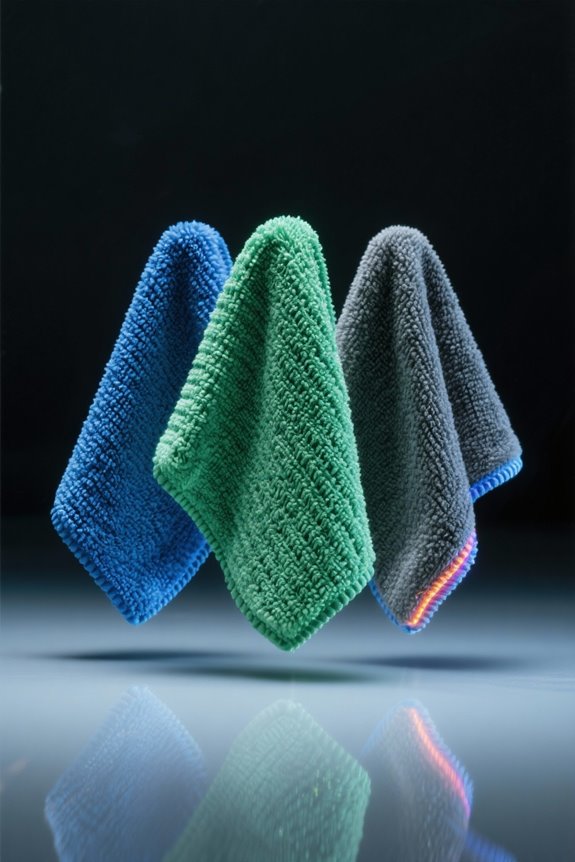
Cleaning glass surfaces requires a careful approach to maintain their clarity and brilliance. The ideal tool for this task is a glossy microfiber cloth, as its tightly woven structure guarantees a streak-free finish. For effective glass cleaning, always use a clean microfiber towel and avoid applying cleaners directly onto the glass; instead, spray the cleaning solution onto the cloth. Wipe in a circular motion, utilizing one side of the cloth for applying the cleaner and the other for drying. Regular maintenance of the microfiber cleaning cloth is essential; wash it separately to prevent dirt transfer. Remember, consistent care with the right types of cloth guarantees the gleaming appearance of your glass surfaces remains intact. Similar to acoustic panel maintenance, gentle cleaning methods without harsh chemicals will help preserve the material’s integrity while maintaining optimal performance.
Best Practices for Matte Surface Care

Matte surfaces require specialized care to preserve their unique finish and prevent damage. To effectively clean these surfaces, use lint-free microfiber cloths with a slightly brushed texture, which diffuses light and minimizes glare. Gently wipe away dust and dirt with a dry cloth to avoid scratches. For stubborn stains, lightly dampen the cloth with water or a gentle cleaning solution—ensuring it remains damp but not soaked. Regular washing of the microfiber cloths is essential; aim for a wash every few uses to prevent dirt buildup. Consider cloths treated with anti-static properties, as they help repel dust, making cleaning safer and more effective for matte surfaces. Following these practices will prolong the life of your matte finishes. Always perform cleaning with your device powered off for safety and optimal results when addressing tough stains or general maintenance.
Advantages of Smooth Microfiber for Screens

When it comes to maintaining the pristine appearance of screens, smooth microfiber cloths, commonly referred to as “microglass,” offer distinct advantages that surpass traditional cleaning materials. These cloths feature a fine, silky weave and high fiber density, boasting around 90,000 fibers per square inch, which effectively trap dirt, dust, and fingerprints. Smooth microfiber is specially formulated to be non-abrasive, making it safe for use on sensitive surfaces like smartphone screens and camera lenses. The split fibers in high-quality microfiber enhance absorbency and dirt-trapping capabilities, proving more efficient for electronic screen maintenance than lower-quality alternatives. By investing in regular washing, users can guarantee longevity, helping to prevent smudges and maintain exceptional screen visibility over time. Similar to keyboards with IPX4 certification, these specialized microfiber cloths offer protection against accidental liquid exposure during cleaning.
Comparing Glossy and Matte Microfiber Cloths
Selecting the right microfiber cloth can greatly impact the effectiveness of cleaning and maintaining various surfaces. Glossy microfiber cloths feature tightly woven, ultra-smooth fibers that deliver a polished, streak-free shine, making them ideal for surfaces such as eyeglasses and camera lenses. In contrast, matte microfiber cloths possess a slightly textured weave that diffuses light, making them versatile for routine cleaning without glare. The key differences lie in their applications: glossy cloths excel in enhancing reflective finishes, while matte cloths effectively absorb moisture and conceal smudges. To choose the right microfiber, consider the surface and intended use—glossy for formal presentations and polished finishes, and matte for everyday cleaning tasks across various surfaces. Much like the rubber gasket design used in premium microphone stands to minimize vibrations, quality microfiber cloths employ specialized materials to prevent scratches and damage during cleaning.
Maintenance Tips for Long-lasting Microfiber Performance
To guarantee microfiber cloths maintain their ideal cleaning capabilities, regular maintenance is vital. Users should wash microfiber cloths separately to prevent lint transfer, utilizing a mild detergent without fabric softeners or bleach. For best long-lasting microfiber performance, air drying is recommended, or tumble drying on low heat can be employed to keep fibers intact. Proper storage is also important; store these cloths in clean, dry conditions, ideally within a dedicated bag to shield them from contaminants. Additionally, avoid fabric softeners, as they can coat fibers, diminishing their ability to efficiently trap dirt and moisture. Similar to how cooling performance matters for gaming laptops, maintaining clean microfiber cloths is essential for optimal device maintenance. Finally, replace any cloths showing signs of wear, like fraying or diminished absorbency, to guarantee effective general cleaning, particularly for sensitive surfaces like screen protectors.
Frequently Asked Questions
Can You Use Any Microfiber Cloth on a Screen?
Not all microfiber cloths are suitable for screen cleaning. The durability and fiber density play significant roles; choosing a lint-free option enhances results while preventing scratches, highlighting the importance of appropriate microfiber selection for ideal screen maintenance.
Which Type of Microfiber Cloth Is Best?
In the vast landscape of cleaning techniques, selecting the right cloth material is essential. For screen safety, glossy microfiber cloths reign supreme, while maintenance tips suggest matte options for versatile, everyday cleaning tasks.
Why Are There Different Types of Microfiber Cloths?
Different types of microfiber cloths exist due to their unique properties, optimizing cleaning effectiveness across various applications. Texture variations influence performance, ensuring specific cloths suit distinct purposes, such as glossy surfaces or everyday cleaning tasks.
What Is the Best Cloth to Use on a TV Screen?
“An ounce of prevention is worth a pound of cure.” For ideal screen protection, employing a high-density microfiber cloth demonstrates essential TV cleaning techniques, leveraging microfiber advantages while maintaining screen integrity throughout the cleaning process.